UP CIDS–DSPPP Contributes to Congressional Deliberations on AI Governance
The Data Science for Public Policy Program (DSPPP) of the UP Center for Integrative and Development Studies (UP CIDS) participated in legislative deliberations at the House of Representatives on March 12, 2026, as part of ongoing efforts to develop legislation on the governance of artificial intelligence (AI) in the Philippines.
Representing UP CIDS–DSPPP, Prof. Ebinezer R. Florano served as a resource person during discussions convened by the House Committee on Information and Communications Technology, which is currently crafting legislation on the development and regulation of AI. The committee is chaired by Rep. Javier Miguel Lopez Benitez of the 3rd District of Negros Occidental.
During the consultation, Prof. Florano read a policy brief that advocated several key provisions to strengthen the country’s emerging AI governance framework. Among these were:
- the people’s right to explanation regarding automated or algorithmic decisions affecting them;
- the establishment of a multi-layered redress system to ensure accountability and remedies for individuals adversely affected by AI systems;
- the adoption of a four-tier risk-based regulatory framework to guide proportionate regulation of AI technologies;
- the formulation of a Code of AI Regulations (CAIR) to operationalize AI governance standards; and
- the creation of a National AI Commission (NAIC) to provide institutional leadership and oversight for AI policy and regulation.
According to Prof. Florano, there appeared to be broad agreement among resource speakers on the importance of the right to explanation, the multi-layered redress system, and the risk-based regulatory approach. Further discussions are expected regarding the proposals for the CAIR and the establishment of a NAIC, which aim to strengthen the institutional architecture of AI governance in the Philippines.
Despite differing views on some institutional mechanisms, participants shared a common perspective that AI governance in the Philippines should remain human-centric, protect citizens’ rights, and foster innovation that contributes to national development.
The Committee aims to accelerate the drafting and consolidation of AI-related legislative proposals within the year. UP CIDS–DSPPP expressed its readiness to continue supporting evidence-based policymaking and legislative development on AI governance.

Prof. Florano presented a policy brief entitled “Toward a Unified AI Governance Act: Codifying the Right to Explanation and Advancing Innovation & Competitiveness” with annexes that have draft legislative provisions on the right to explanation, a multi-layered redress system, a risk-based regulatory framework, a Code of AI Regulations, and the National AI Commission.
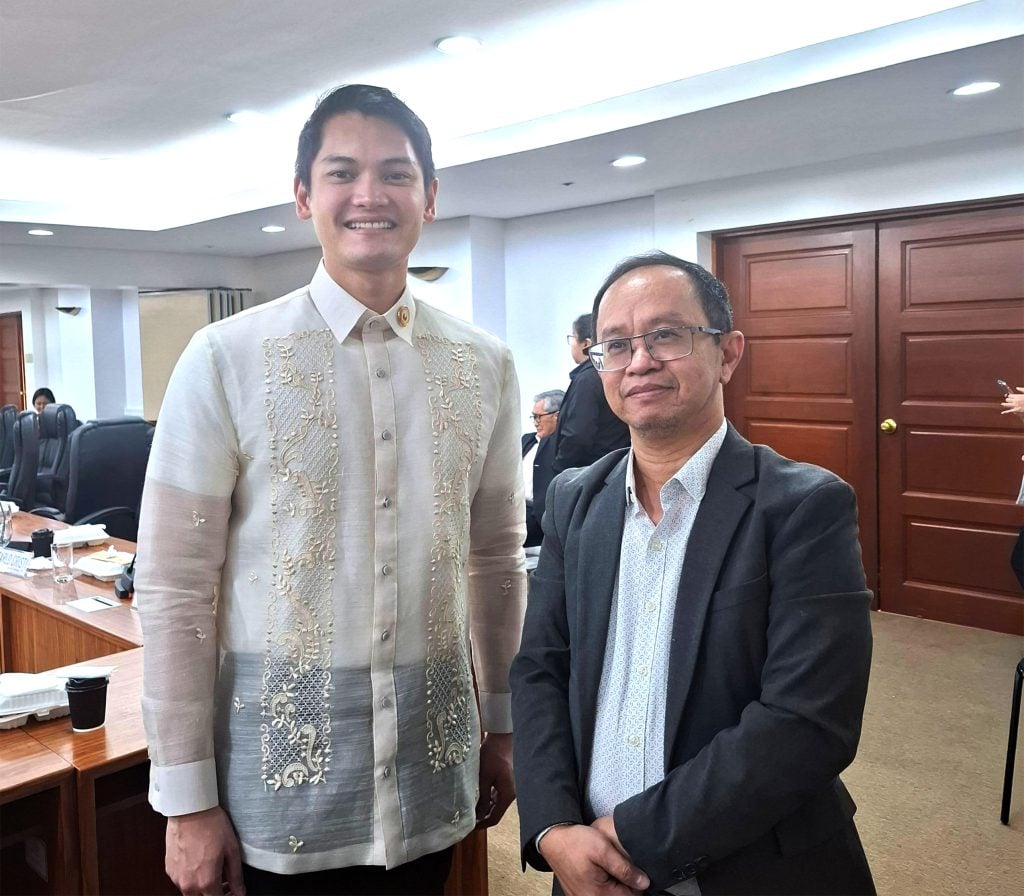
Prof. Florano, Convenor of the DSPPP, expressed support for the immediate passage of an AI law within the year to Rep. Javier Miguel Lopez Benitez, chairperson of the House Committee on Information and Communications Technology.