Policy Pulse: 100% Online Class Policy: Considerations on Higher Educational Response to the National Energy Emergency
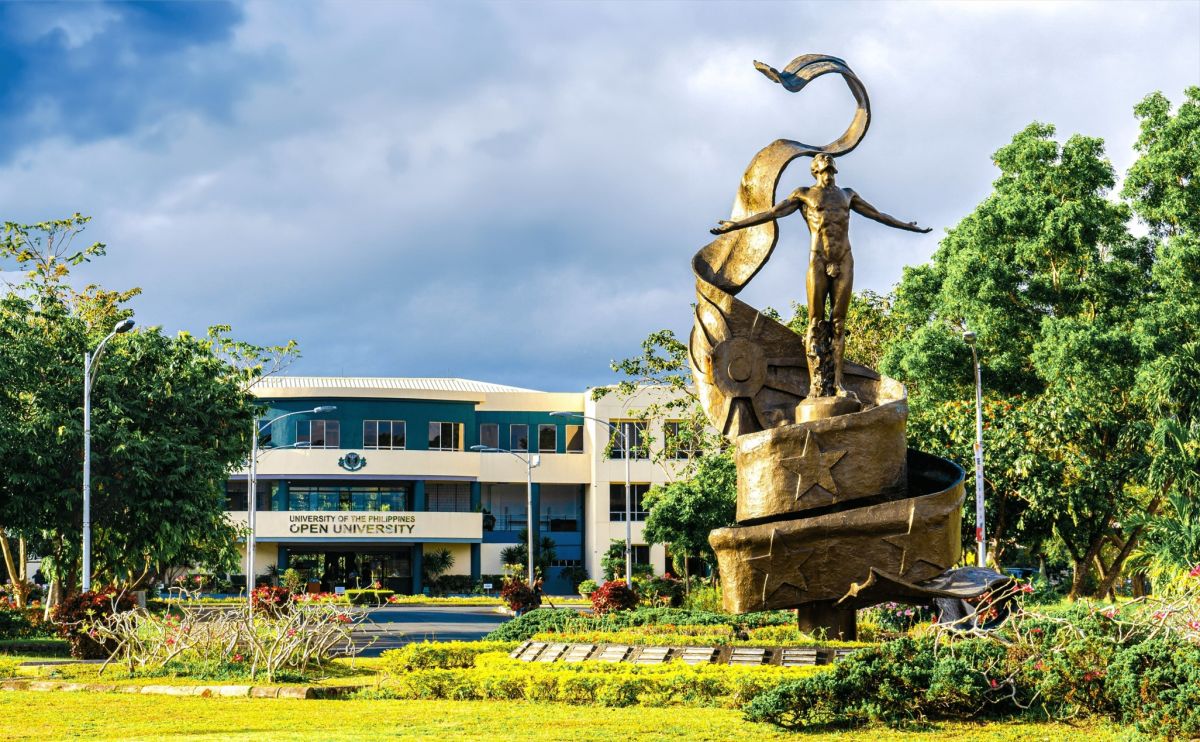
The University of the Philippines Open University in Los Baños, Laguna.
Filipinos experienced another round of fuel price increases on 7 April 2026. With global oil prices beyond national control, different sectors have been exploring ways to adapt. In the higher education sector, the response took the form of flexible learning, which is well-intentioned and familiar but not without complications.
Through Memorandum Order No. 117, series of 2026, the Commission on Higher Education (CHED) has provided colleges and universities with the option to shift to fully online classes amid rising fuel costs and supply constraints. The policy seems to be a sensible response. As transportation costs rise, moving classes online can help ensure continuity of learning while reducing expenses for students and faculty.
At the University of the Philippines Open University (UPOU), where teaching and learning are grounded in Open Distance e-Learning (ODeL), a 100% online class is not new. UPOU has developed the necessary infrastructure, faculty expertise, and systems to support learners in independent learning.
At the same time, the policy deserves further reflection. What works for an institution designed for distance education may not be immediately replicable in other universities. Shifting to 100% online learning is not simply a change in delivery mode; it requires preparation across systems, people, and resources.
Online learning also requires access to a stable internet connection, appropriate devices, and a conducive learning environment, which may not be available to all. While transport costs may drop, electricity and connectivity expenses may rise. This raises a key question about how energy use is redistributed from public infrastructure to private households.
The Philippines has been under a state of national energy emergency since 24 March 2026, and the CHED memo can be seen as a proactive effort to address this urgent situation. Notably, the policy allows higher education institutions (HEIs) to determine their own flexible learning arrangement based on their capacities. This flexibility recognizes the diverse contexts of higher education institutions and would benefit from appropriate support.
UPOU believes that HEIs must evaluate their institutional capacities by examining: (1) the role of flexible delivery modes in achieving the institution’s strategic vision; and (2) the level of establishment and maturity of systems for materials development, technology management, faculty development, learner support, and quality assurance. These capacities determine the extent to which institutions can implement online and flexible learning in a coherent and sustainable manner.
To support this transition, UPOU has established programs and capacity-building courses to help HEIs transition to flexible and online modes of instructional delivery in support of Republic Act 10650 (Open and Distance Learning Act).
The kind and level of support extended to HEIs is also shaped by their readiness for flexible modes of delivery, which may be assessed in terms of the alignment between flexible learning and their institution’s vision and mission; the appropriateness of delivery models for selected programs; the extent to which academic policies are aligned with flexible learning modalities; the level of faculty certification in online teaching and learning; the institutionalization of a learning management system (LMS) supported by trained IT personnel; the establishment of units for managing and monitoring course materials development and ICT infrastructure; and the adequacy of learner support systems for flexible and distance learning delivery.
In view of this, CHED’s directive can be seen as an emergency measure rather than a long-term solution. The experience of UPOU demonstrates how online education can be effectively sustained through long-term and continuous investment in systems, faculty development, and strong learner support.
Online learning does work, but the discussion needs to focus on how it is implemented in ways that are inclusive, realistic, and responsive to institutional contexts. Universities must carefully assess their capacities, and the transition to their chosen instructional modality needs to be supported to ensure access, quality, and equity.
CHED’s policy reflects the ongoing changes in the global educational landscape, which are threatened by man-made and natural disasters. As more educational institutions adopt online learning, the opportunities for participatory and sustainable approaches to long-term reforms also open up.
University of the Philippines Open University