First Ever “Explainable AI for Public Policy” Basic Bootcamp in the Summer Capital of the Philippines for Northern Luzon AI Techies
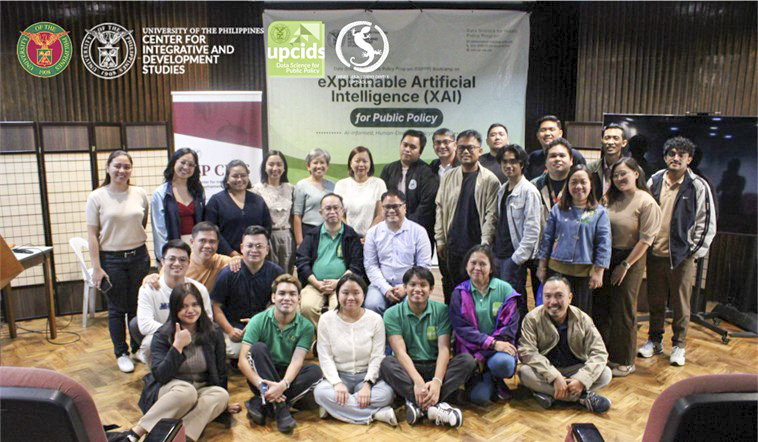
This year’s DSPPP’s second Basic Bootcamp on “eXplainable Artificial Intelligence for Public Policy (XAI4PP): Introduction to Data Analytics and Its Application to AI and Policy Analytics” was held in the University of the Philippines Baguio in collaboration with the Cordillera Studies Center last 24th to 28th of August 2026. Target attendees from Northern Luzon’s local government units and academic institutions were joined by AI avid participants as far as Cebu and Manila.
The pioneer batch of Northern Luzon Bootcampers in UP Baguio City numbered to twenty-one (21) composed of an independent researcher; the Supreme Court of the Philippines and Save the Children Foundation representatives from Manila; San Juan City Government Head; the DILG Region IV-A Operations Officer; the LGU Tourism Officer from Ronda, Cebu; Nueva Ecija’s DA PhilRice representative; four (4) representatives from the Bataan National Highschool for the Arts; two (2) from DTI Region 2; three (3) Provincial Government Officers from Ilocos Norte and one from Isabela Province; DepED School Division officials from Nueva Vizcaya, Cagayan and Ilagan; and the one and only UP Faculty from the Extension Campus in Tarlac.
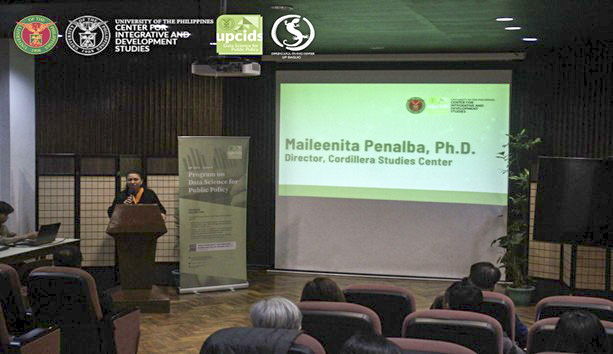
The Director of the Cordillera Studies Center (CSC), Dr. Maileenita A. Penalba, welcomed the participants and the training team to UP Baguio. DSPPP acknowledges the strong partnership and generosity of the CSC in hosting the Bootcamp activities in their Knowledge and Training Resource Center, College of Social Sciences, UP Baguio. CSC is well-known for its cultural studies and publications. The graduation ceremony was graced with the presence of the UP Baguio’s Vice Chancellor for Academic Affairs, Prof. Leah E. Abayao. The success of the 2nd Basic Bootcamp was made possible through the help and the warm welcome of the employees in the University of the Philippines, Baguio.
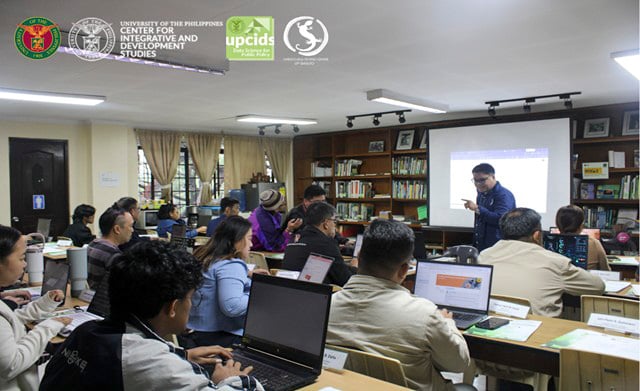
Prof. Jonathan B. Mamplata, facilitated the technical lecture and hands-on training on data science and the different types of machine learning focusing on how these approaches can be used to identify patterns and make predictions from data. The participants were introduced to several machine learning concepts and techniques, including K-means clustering, Principal Component Analysis (PCA), and different classification methods. He introduced a new AI open sourced user-friendly application, Orange, the software used for data visualization, data mining, and machine learning without requiring coding experience. The participants were introduced to its use for working with data, including data visualization and transformation. Prof. Mamplata imparted basic skills training on Python programming for Data Analysis using Google Collab.
Wrapping up the 5-day Bootcamp, the Data Science for Public Policy Program Leader, Dr. Ebinezer R. Florano, presented a summative overview on writing a convincing policy brief taking into consideration the target stakeholders, components, analytic methods, and development of an executive summary. He stressed that AI and public policymaking must go hand in hand, and as such: AI for Policy and/or Policy for AI must be explainable. It should be transparent and auditable in its actions and decisions. As government officials and UP representatives, we must answer the calls of our time. We must harness AI to deal with our data, derive strong and insightful insights from it, and guide AI to follow our values and judgment–all in an effort to make it inclusive and effective for our community and to the Filipino people.