A Round Table Discussion on Illegal, Unreported, and Unregulated Fishing (IUUF) in Philippine Waters
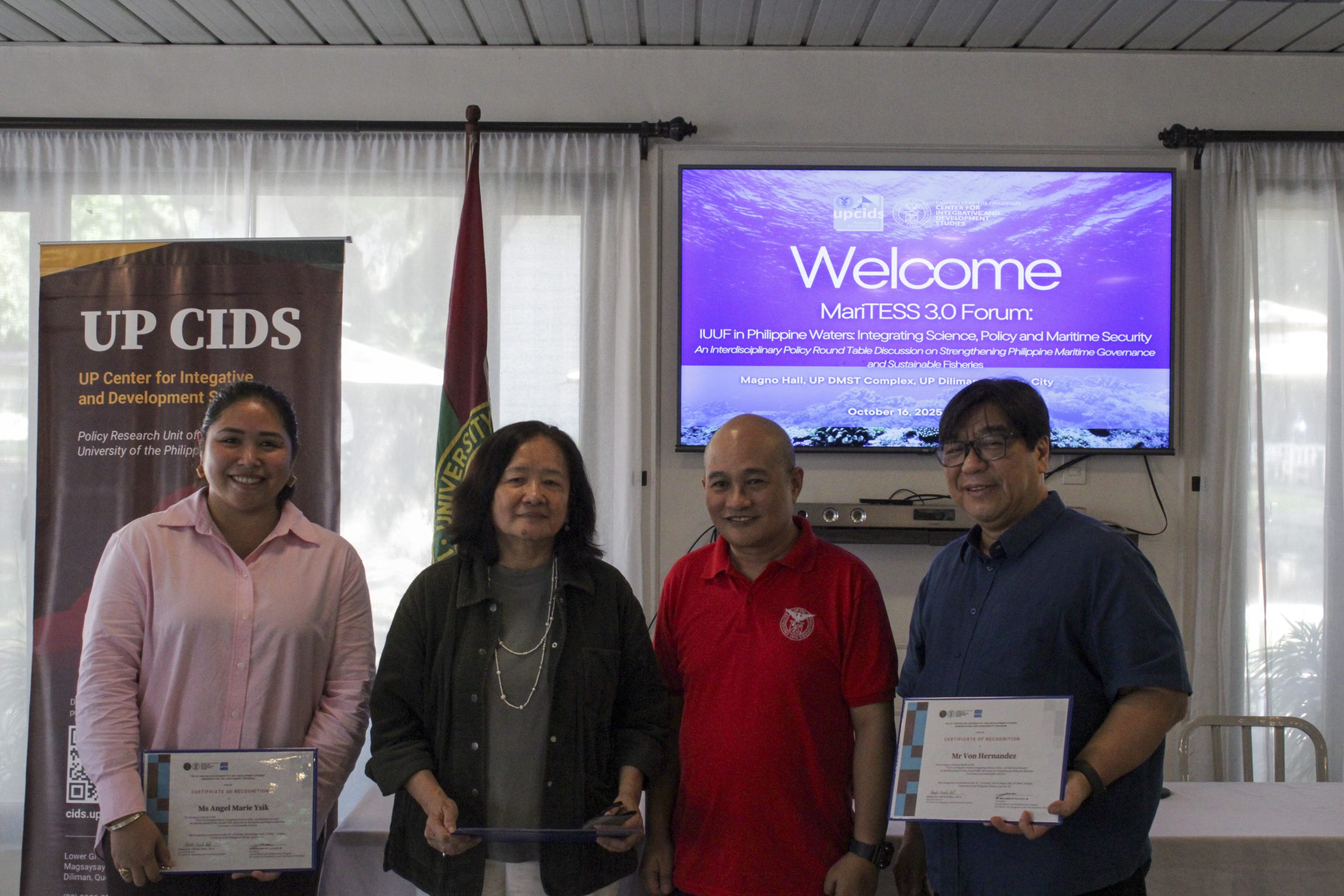
Organized by: Conservation and Biodiversity Program, University of the Philippines Center for Integrative and Development Studies (UP CIDS)
Date: 16 October 2026
Venue: Magno Hall, UP DMST Complex, UP Diliman, Quezon City
The Conservation and Biodiversity Program (CBP) of the University of the Philippines Center for Integrative and Development Studies (UP CIDS) conducted a Round Table Discussion on Illegal, Unreported, and Unregulated Fishing (IUUF) in Philippine waters. The activity brought together resource speakers, reactors, and participants to discuss the scientific, policy, and maritime security dimensions of IUUF, as well as the challenges and opportunities for strengthening fisheries governance and promoting the sustainable management of Philippine marine resources.
The discussion provided a platform for exchanging perspectives on the current state of fisheries management, the implications of IUUF for marine biodiversity and coastal communities, and the need for coordinated institutional responses to address illegal fishing activities and related governance concerns.
The program commenced with the registration of participants, followed by the invocation and the singing of the Philippine National Anthem. Dr. Rosalie A. Hall, Executive Director of UP CIDS, delivered the welcome remarks, formally opening the activity and emphasizing the importance of discussions that bring together scientific knowledge, policy considerations, and institutional perspectives in addressing pressing environmental and fisheries concerns.
The morning session featured presentations by Dr. Mudjekeewis Santos, Dr. Wilfredo Campos, and Dr. Rosalie Hall. Each speaker was introduced prior to their respective presentations. The session provided an opportunity to examine IUUF and its implications from different perspectives relevant to fisheries science, governance, and the sustainable management of aquatic resources.
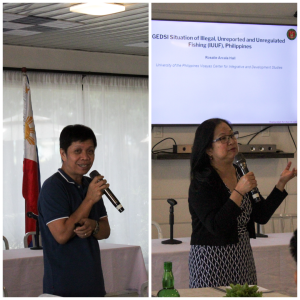
The afternoon session resumed with the introduction of the speakers, followed by a presentation from Mr. Von Hernandez of Oceana. His participation contributed to the discussion on marine conservation, fisheries protection, and the role of civil society organizations in addressing illegal fishing and promoting sustainable fisheries management.
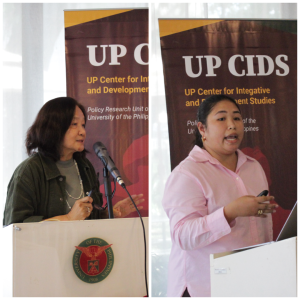
The presentations were followed by reactor commentaries from Ms. Loida Corpus, Executive Director of Quantitative Aquatics Inc and Ms. Angel Marie Ysik current Philipppine Campaigner for Environment Justice Foundation (EJF). The reactors provided additional perspectives on the issues raised by the speakers, helping broaden the discussion and identify areas requiring further attention and collaboration among relevant institutions and stakeholders.
An open forum was subsequently conducted from 2:00 p.m. to 3:00 p.m., allowing participants to raise questions, share observations, and exchange views with the speakers and reactors. The discussion served as an opportunity to clarify key issues and explore possible approaches to strengthening the country’s response to IUUF, particularly through improved coordination among scientific institutions, government agencies, civil society organizations, and other stakeholders involved in fisheries governance and maritime security.
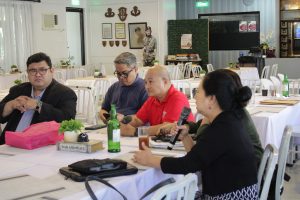
The activity concluded with closing remarks delivered by Professor Benjamin Vallejo, Convenor of the Conservation and Biodiversity Program of UP CIDS. The closing remarks underscored the importance of sustained dialogue and collaboration in addressing IUUF and advancing evidence-based policies for the protection and sustainable management of Philippine fisheries and marine ecosystems.
The Round Table Discussion provided a venue for exchanging knowledge and perspectives on illegal, unreported, and unregulated fishing in Philippine waters. By bringing together experts and representatives from different sectors, the activity highlighted the importance of integrating scientific research, policy development, maritime security, and stakeholder participation in addressing IUUF.
The discussion also reinforced the need for continued engagement among academic institutions, government agencies, civil society organizations, and other relevant stakeholders to strengthen fisheries governance, protect marine biodiversity, and support the sustainable use of the country’s aquatic resources.
The activity forms part of the continuing efforts of the UP CIDS Conservation and Biodiversity Program to facilitate policy-oriented discussions and promote science-informed approaches to conservation, biodiversity protection, and sustainable resource management.