Mapping Climate Imaginaries in the Philippines: Exploring Alternative Futures beyond Techno-Fixes
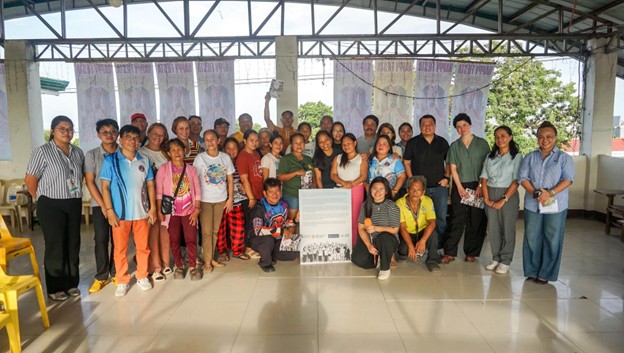
The UP Center for Integrative and Development Studies (CIDS) Urban Studies Program – UP Cebu, in partnership with Dr. Gemma Sou of Monash University and Dr. Justin See of the University of Melbourne, recently concluded a two-day series of activities under the Mapping Climate Imaginaries in the Philippines: Exploring Alternative Futures beyond Techno-Fixes project, funded by the Australian National University (ANU) Philippines Institute with a counterpart from UP CIDS Urban Studies Program.
Held on 26–27 August 2026, the activities connected the experiences and knowledge of Barangay Inayawan residents with creative research and academic practice, bringing together community members, government officials, NGOs and CSOs, researchers, faculty, and students.
Day 1: Community Voices at the Launch of the Atlas of Climate Imaginaries
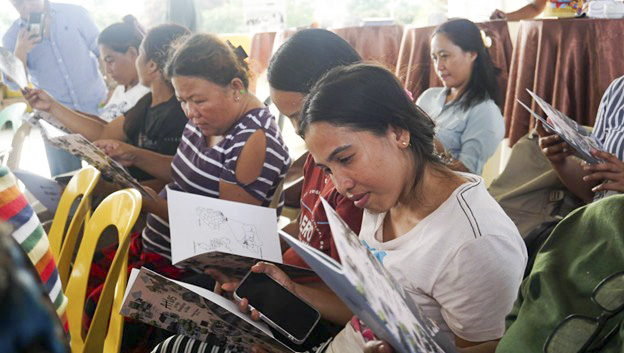
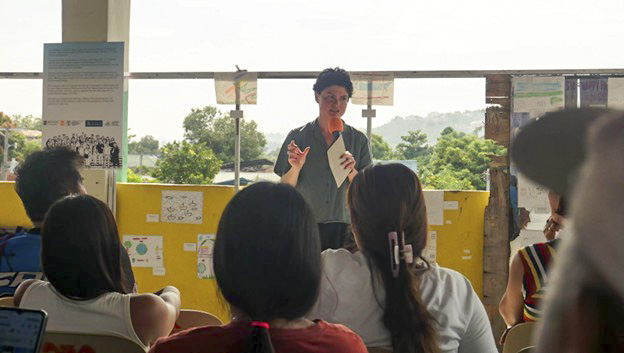
The series opened on 26 August at the Barangay Inayawan Annex Hall with the official launching of the Atlas of Climate Imaginaries.
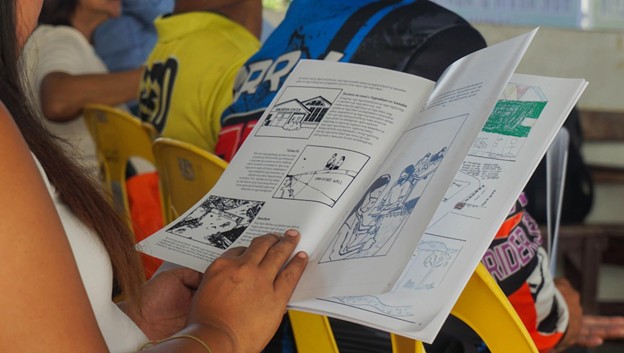
The community exhibition features drawings and stories reflecting the memories, experiences, hopes, and visions of Inayawan residents for a safer and more resilient future amid climate change and typhoons. Developed through drawings, conversations, interviews, and observation, the Atlas highlights how resilience is shaped not only by infrastructure, but also by livelihoods, housing, community, faith, and the environment.
Following the presentation and official launch, residents engaged in a sharing and feedback session with representatives from government, particularly the Cebu City Planning and Development Office and barangay officials led by Barangay Captain Atty. Kirk Bryan Repollo, and from civil society organizations specifically Pagtambayayong Foundation Executive Director Ms. Paula Fernandez. The discussion provided a space for participants to reflect on their artworks and share their perspectives on the challenges and possibilities of building climate resilience in the community.

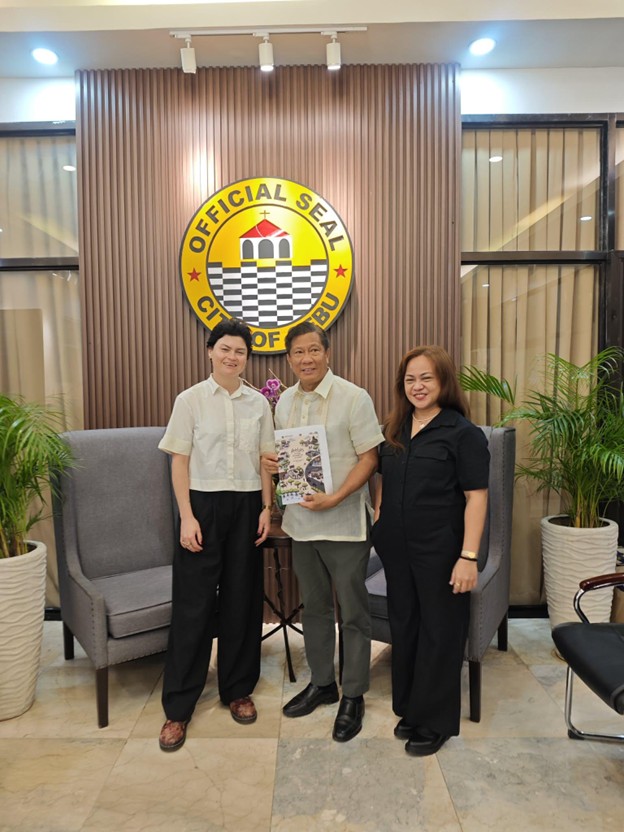
Prof. Weena Gera, Project Leader of the Urban Studies Program – UP Cebu, and Dr. Gemma Sou also paid a courtesy visit to Cebu City Mayor Hon. Nestor Archival, where they presented a copy of the Atlas of Climate Imaginaries and shared the project’s community-based approach to understanding climate resilience.
Day 2: Unsettling Disaster Representation through Creative Methods
On 27 August, the project continued at the University of the Philippines Cebu with the workshop Unsettling Disaster Representation with Creative Methods, facilitated by Dr. Gemma Sou of Monash University.
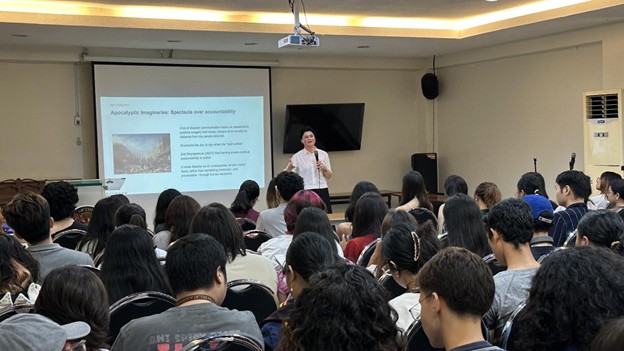
The workshop introduced creative and participatory approaches to understanding and representing disasters. It encouraged students to critically examine conventional disaster narratives and explore how creative practices can provide space for alternative experiences, perspectives, and forms of community knowledge.
Students from several classes in the Political Science and Design programs participated in the workshop. Drawing on their disciplinary and creative skills, participants created disaster comics as a way of exploring visual storytelling and alternative representations of disaster experiences.
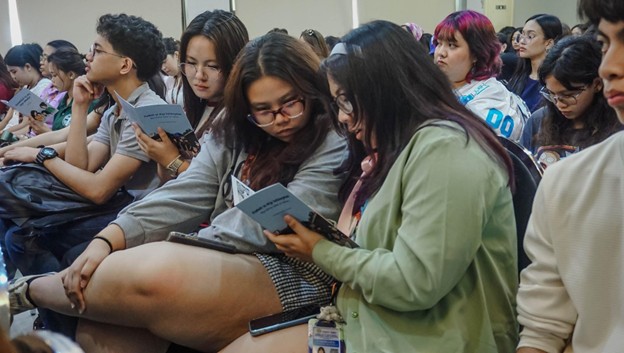
Through the activity, students engaged with creative methods not simply as forms of artistic expression, but as tools for critical reflection, research, and community engagement.
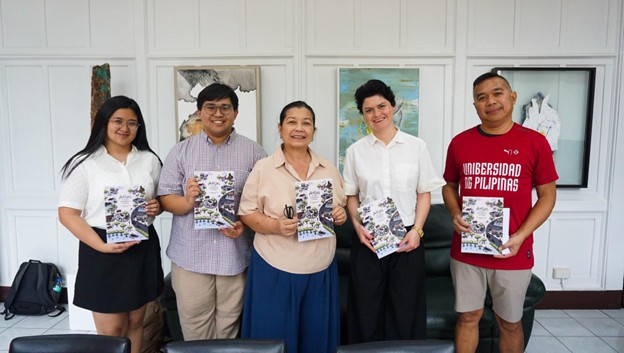
Following the workshop, Dr. Sou, along with Ms. Mari Elise Gwyneth Lim and Mr. John Ryan Jacot, members of the Urban Studies Program – UP Cebu project team, paid a courtesy visit to UP Cebu Chancellor Atty. Leo Malagar and Vice Chancellor for Academic Affairs Palmy Marinel Tudtud, where copies of the Atlas of Climate Imaginaries were presented to the university leadership.
The two-day series demonstrated how community knowledge, creative methods, and academic research can come together to broaden understandings of climate resilience. From the drawings and stories of Inayawan residents to the disaster comics created by UP Cebu students, the project highlights the importance of listening to and representing the diverse ways people experience and imagine environmental change.
The project team thanks the residents of Barangay Inayawan specifically from Sitio Bagong Silang, Bagong Pag-asa and Bagong Paglaum, government officials, NGOs and CSOs, UP Cebu faculty and students, and institutional partners for their participation and support.