Political Economy Program (PEP)

  • UPD Task Force Nation-Building
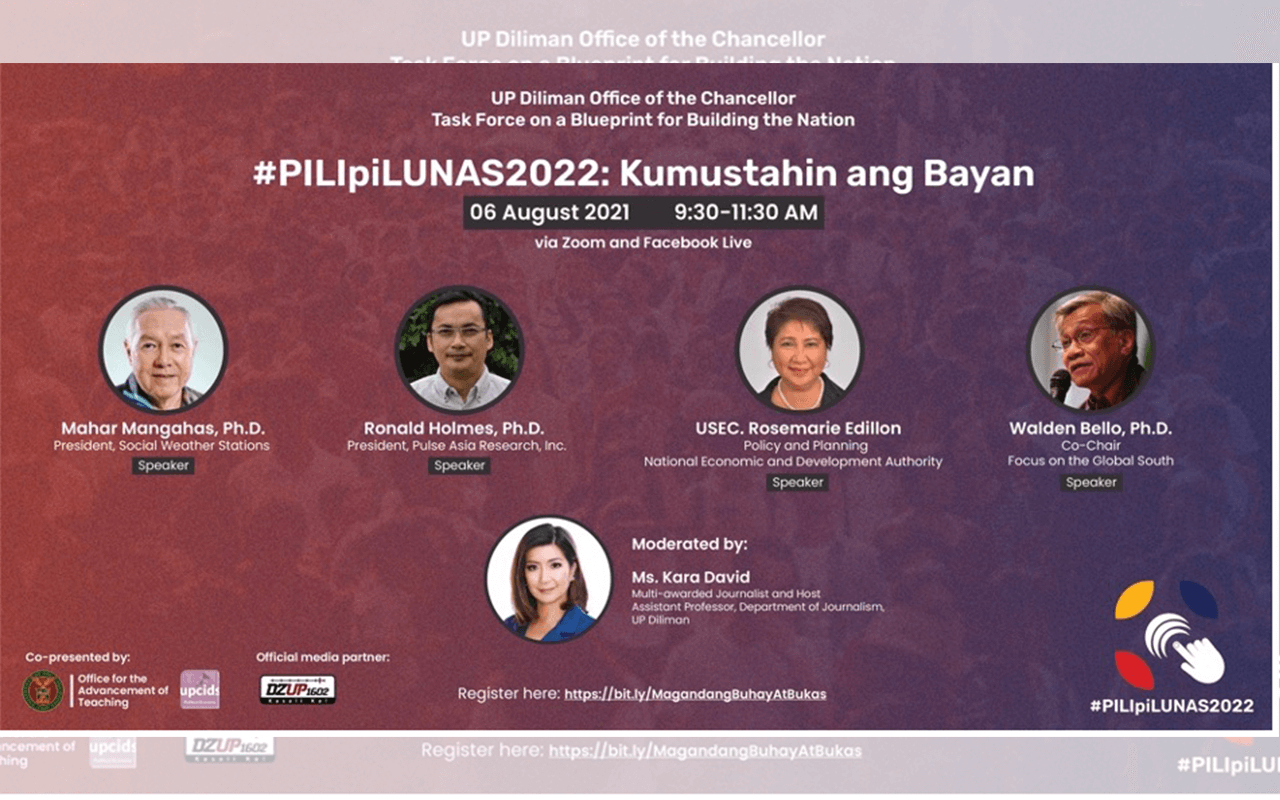
    Resource speakers from Social Weather Stations (SWS), Pulse Asia, Inc., Focus on the Global South; and the National Economic and Development Authority (NEDA) discuss Filipinos’ perceptions on their quality of life during the webinar, #PILIpiLUNAS2022: Kumustahin ang Bayan.”
  • UPD Task Force Nation-Building
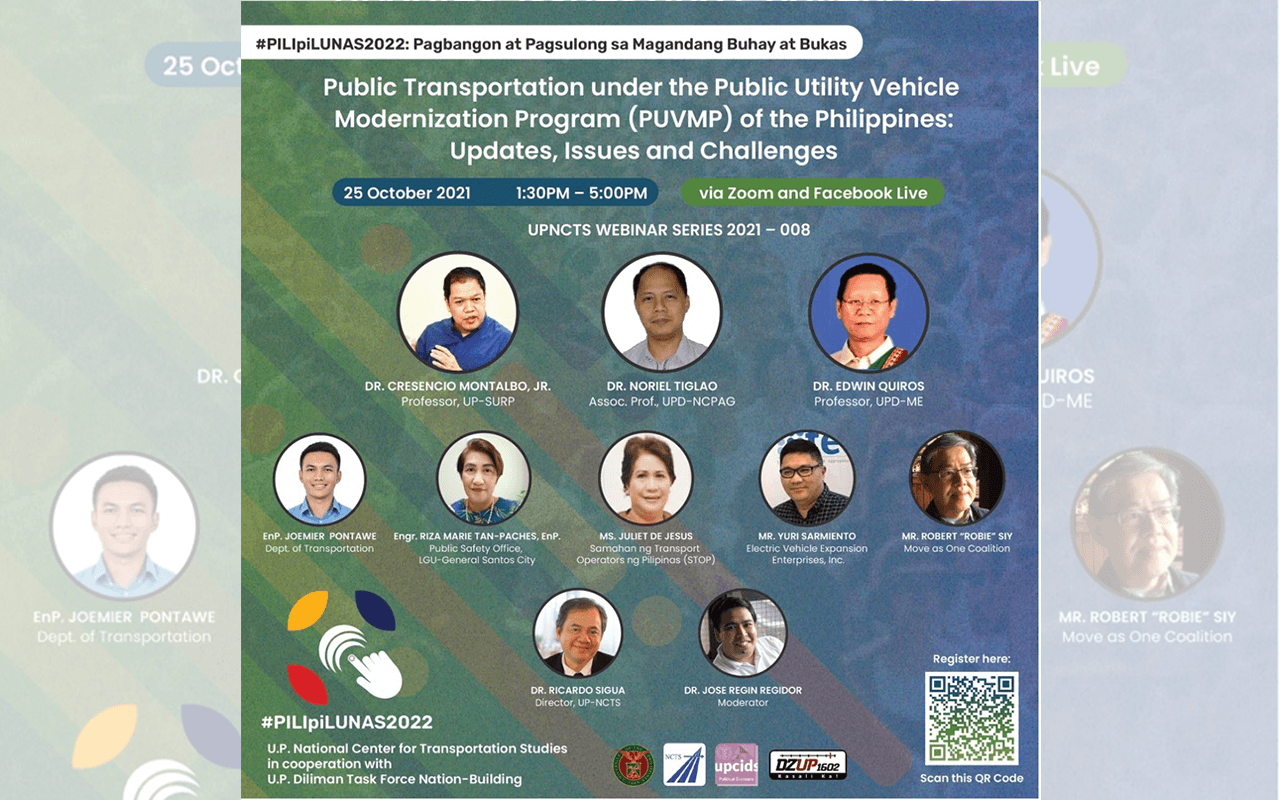
    Faculty researchers from UP Diliman discuss proposed improvements to local public transport services during the webinar, “Public Utility Vehicle Modernization Program of the Philippines: Updates, Issues, and Challenges.”
  • UP Diliman Website
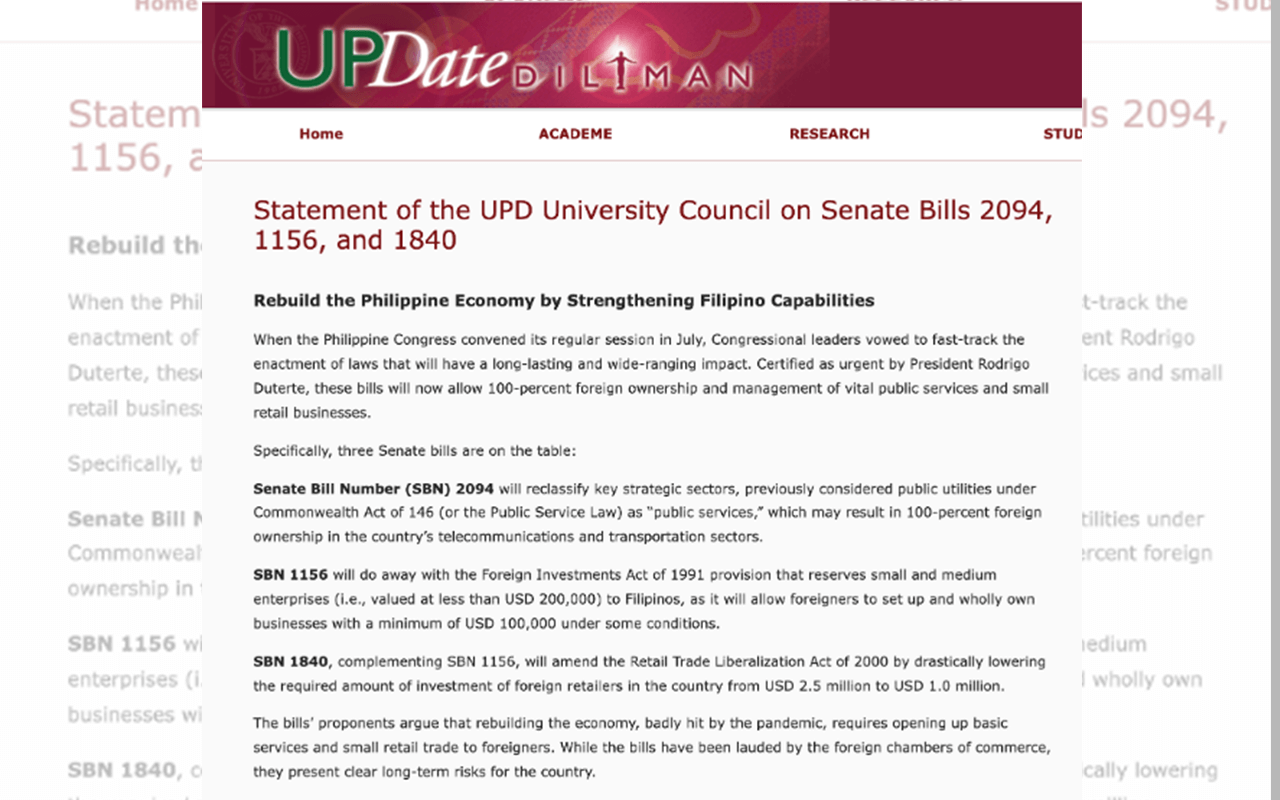
    The UPD University Council adopted the statement, entitled “Rebuild the Philippine Economy by Strengthening Filipino Capabilities,” to raise awareness on how easing foreign ownership restrictions on public services and small businesses could be detrimental to Filipinos.

    Rationale

    Over the past decade, the Philippines has risen to become one of the world’s fastest growing economies, with growth rates averaging about six percent annually. Such growth, largely linked to the booming global services economy, has greatly expanded the domestic consumer market that, in turn, has propelled the domestic service sector forward.

    This growth pattern has generated new wealth for commercial interests and higher incomes for the middle class but has only marginally delivered on the development needs of the poor majority. Thus, to unlock the full development potential of the current conjuncture, there is a need to ensure structural transformation and equitable development.

    The Political Economy Program (PEP) seeks to contribute to building the momentum for development policies and programs that promote domestic production, higher productivity, and the just distribution of development resources. It however also recognizes that such initiatives often fall by the wayside due to factors such as lack of resources and public awareness, policy gaps, vested interests, partisan politics, and the dominance of the free market orthodoxy in policy circles.

    Partly to address these challenges, PEP strives to identify or create spaces for critical engagement and cooperation of the academic and research community, government, and industry and producer groups.


    Objectives

    PEP aims to contribute to building the momentum for policy or institutional reforms, and has the following objectives:

      • To advance innovation-driven and equitable development through the conduct of problem-solving research on development policies and practice;
      • To promote collaboration among the academe, government, industry, and other stakeholders in pursuit of inclusive technology and sustainable industrial policy; and
      • To popularize the political economy framework in the national conversation on policy options

    Publications


    Current Projects 2026


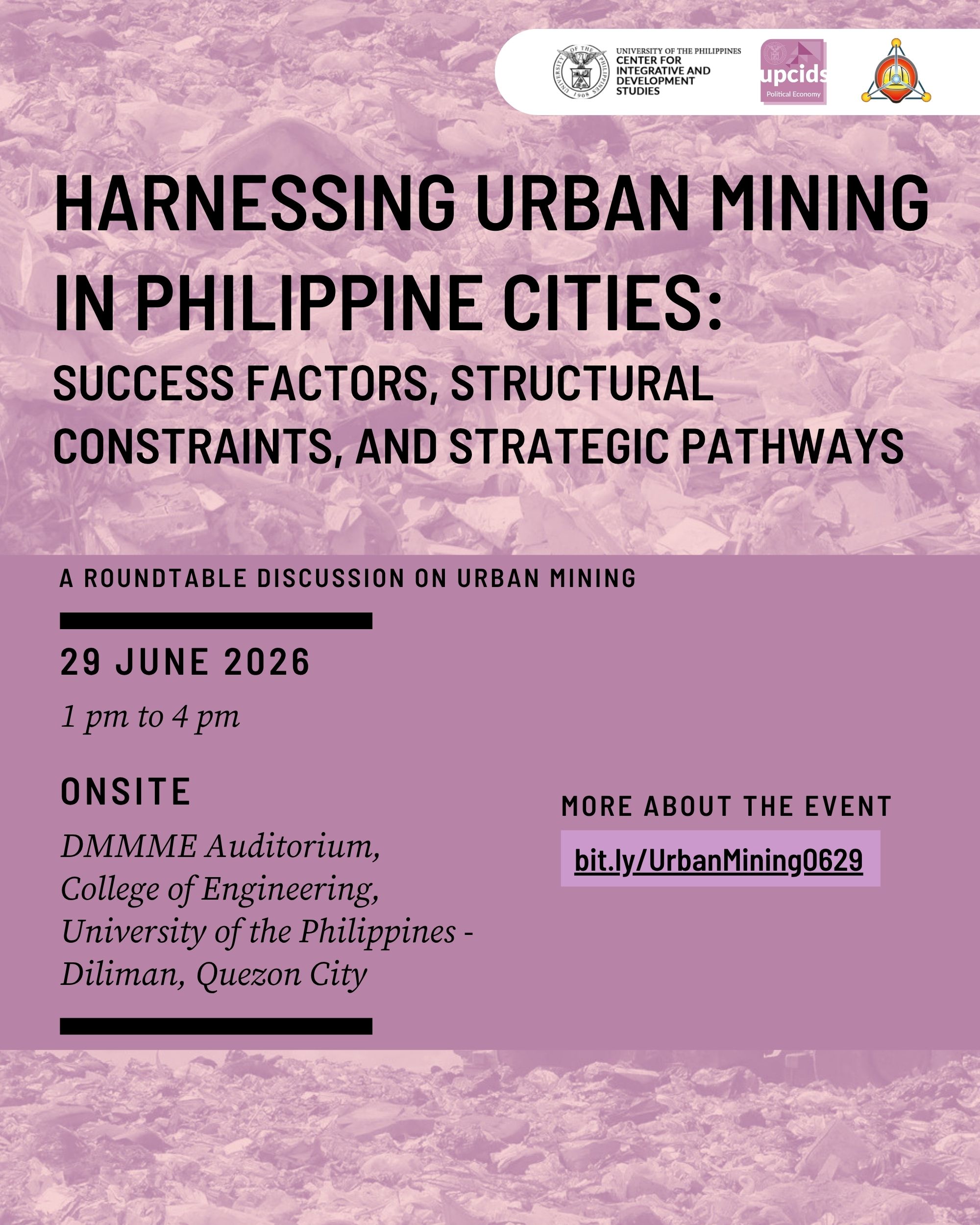
    Urban Mining and the Political Economy of Urban Waste: Toward a Circular Economy Framework for Philippine Cities

    This project seeks to examine urban mining as both a socio-economic opportunity and a governance challenge. It will analyze the intersections of waste policy, market structures, informal labor, and technological systems that shape how urban resources are recovered, 5 processed, and reintegrated into production. By situating urban mining within the broader framework of Philippine political economy and sustainable development, the study aims to generate actionable insights for more inclusive, efficient, and circular waste management systems.

    ASEAN Economic Community in a Multipolar World

    This study examines how the realignment of global trade relations—driven by U.S. tariff policies and the weakening of multilateral mechanisms—affects ASEAN’s efforts to advance regional integration and its search for alternative economic partnerships in the Global South.

    Bridging the Gap between Innovation to Marketplace: Pathways and Challenges in Strengthening Innovators and MSME collaboration

    Through this research project, it aims to navigate the following:

    1. Identify and analyze key barriers encountered that significantly impede the effective technology transfer process and market rollout of innovative products.
    2. Assess the effectiveness and efficacy of government program under RA 1129 (especially under Section 12-16; 18; 21-24, and 26). and RA 11337 (especially Sections; 7; 9; 11-12; 16)
    3. Recommend policies and ecosystem improvements to strengthen innovation-to-market transition.

    Past Projects


    Round Table Discussion Series on Industrial and Development Policies

    The Round Table Discussion Series focuses on specific industries and special topics and is undertaken in partnership with the Office of the Vice Chancellor for Research and Development (OVCRD), College of Science, and College of Engineering of the University of the Philippines Diliman (UPD) and the participation of other campuses and units in the UP System. It provides a mechanism for multisectoral dialogues that would lead to a convergence of university outputs in terms of graduates and researches, and industry needs in the areas of policy, human capital development, and research and development

    PEP Fellows Project

    The Fellows Project seeks to provide the space for and support to former government officials at the forefront of specific policy reforms to write policy papers that will be informed by their expertise and experience and help ensure policy continuity and levelling up. This project also aims to provide a platform for state reformers to share their ideas and learnings on policy formulation and implementation.

    Other Activities

    View the Term Reports from 2018 to 2022 for a list of PEP programs and activities, which include meetings, webinars, and/or publications (forthcoming or already published). 

    News


    The Team

    as of May 2025


    Antoinette R. Raquiza, Ph.D.

    Convenor
    Professor, UP Asian Center
    University of the Philippines Diliman

    Julius Rhoan T. Lustro, Ph.D.

    Co-Convenor

    Assistant Professor, Department of Mechanical Engineering
    University of the Philippines Diliman

    Project Leaders

    Magdaleno Vasquez, Ph.D, – UPD Department of Mechanical Engineering, TTBDO UPD

    Honey B. Tabiola

    Senior Research Analyst

    Political Economy Program