Securing Our Seas: Advancing Maritime Security, Innovation, and Governance in the Philippines
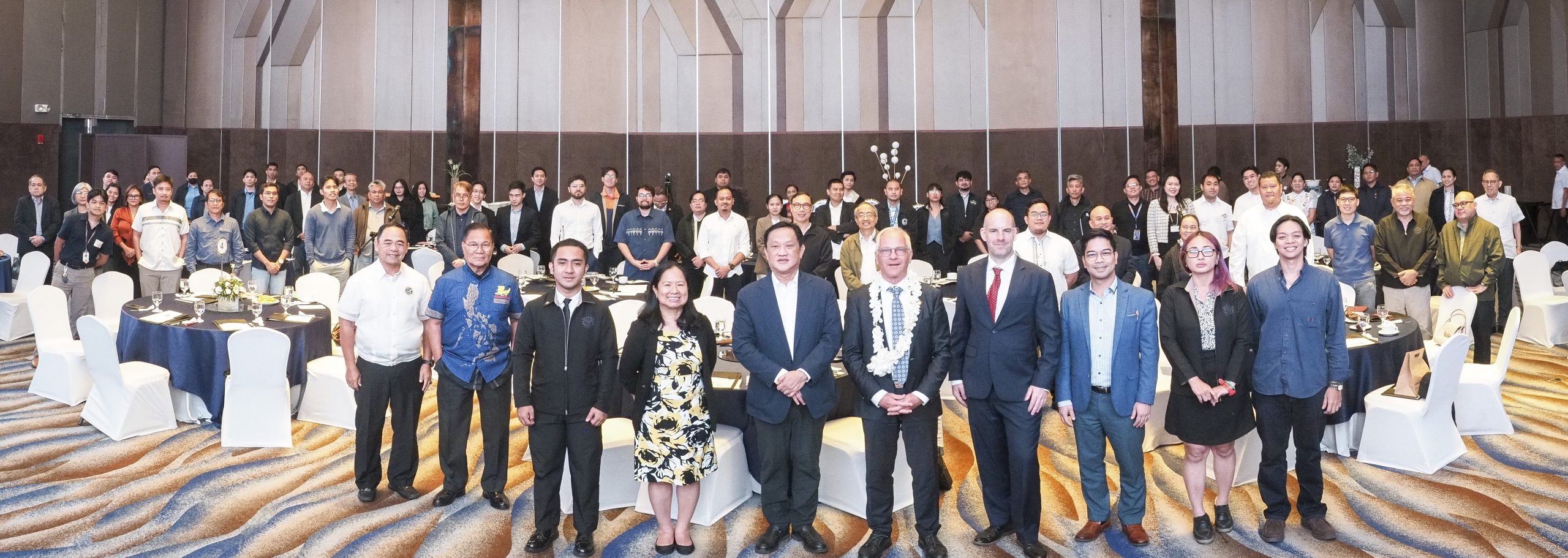
On 5 November 2026, the Securing Our Seas (SOS): Strengthening Maritime Security through Innovation, Collaboration, and Evidence-Based Policy forum was held at Novotel Manila Araneta City, Quezon City. Convening policymakers, maritime practitioners, security experts, researchers, development partners, and representatives from academia and industry, the forum served as a national platform for advancing dialogue on maritime governance, technological innovation, disaster resilience, and environmental sustainability in the Philippines.
Organized by the University of the Philippines Center for Integrative and Development Studies (UP CIDS), in partnership with the Southeast Asian Cooperation on Maritime Security (SEACOM) Project and Deutsche Gesellschaft für Internationale Zusammenarbeit (GIZ) and supported by the Federal Foreign Office of Germany, the forum highlighted the importance of interdisciplinary collaboration in addressing the increasingly complex challenges facing the Philippines as one of the world’s largest archipelagic states. Through expert presentations, policy discussions, and collaborative workshops, participants explored how innovation, research, and cross-sector partnerships can contribute to more effective and evidence-based maritime governance.
The forum formally opened with welcome remarks from Dr. Dave D. Centeno, Assistant Vice President for Research and Innovation of the University of the Philippines, who highlighted the role of universities in generating research and fostering innovation that supports national development and public policy. This was followed by welcome remarks from Dr. Rosalie Arcala Hall, Executive Director of UP CIDS, who emphasized the need for sustained collaboration among government, academia, industry, and development partners in responding to evolving maritime challenges. University of the Philippines President Atty. Angelo A. Jimenez then delivered the opening remarks, reaffirming the University’s commitment to producing research that contributes to national security, resilience, and sustainable development. The opening program concluded with a keynote message from H.E. Andreas Michael Pfaffernoschke, Ambassador of the Federal Republic of Germany to the Philippines, who underscored the value of international cooperation and strategic partnerships in strengthening maritime security and regional stability.
The morning plenary sessions examined the evolving strategic, technological, and environmental dimensions of maritime governance. Captain Xylee C. Paculba PN (Ret.), Senior Lecturer at the University of the Philippines Diliman, opened the technical sessions with an assessment of the Philippine maritime security environment. Framing maritime security as encompassing not only sovereignty and territorial integrity but also coastal communities, marine ecosystems, critical infrastructure, and maritime commerce, she argued that effective maritime governance requires moving beyond surveillance toward a collaborative maritime assessment framework. Drawing from recent legislative developments and the concept of maritime domain awareness, she emphasized the integration of scientific research, operational information, local knowledge, and emerging technologies to strengthen strategic decision-making and institutional coordination.
The discussion then shifted toward the role of innovation in maritime operations through a presentation by Captain Severino B. Destura Jr., PCG, Deputy Commander of the Philippine Coast Guard Security and Border Protection Force and Chief of the Information Operations Group of the National Maritime Center. His presentation explored how technological advancements are enhancing maritime law enforcement capabilities and supporting more responsive maritime operations.
Completing the morning plenaries, Dr. Benjamin M. Vallejo Jr., Convenor of the Conservation and Biodiversity Program of UP CIDS, examined the critical relationship between maritime environmental protection and national security. He emphasized that environmental degradation, illegal fishing, marine pollution, biodiversity loss, climate change, and natural hazards pose significant challenges to maritime governance and require integrated policy responses. Drawing from international conventions and Philippine environmental legislation, Dr. Vallejo highlighted the growing importance of science diplomacy, biodiversity conservation, blue economy strategies, remote sensing, artificial intelligence, and environmental information systems in strengthening marine environmental governance and long-term resilience.
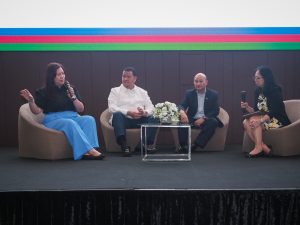
The three plenary presentations were followed by an interactive panel discussion, providing participants with an opportunity to engage the speakers on the intersections of maritime security, technological innovation, and environmental governance. The exchange reinforced the need for
stronger institutional coordination and multidisciplinary collaboration in responding to emerging maritime challenges.
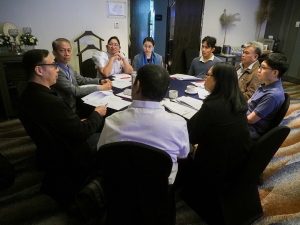
In the afternoon, the forum transitioned into an interactive and facilitated workshop format designed to move beyond dialogue and toward collaborative policy development. Participants were divided into four thematic tracks covering Maritime Security and Law Enforcement, Disaster Response and Maritime Domain Awareness, Marine Environmental Monitoring and the Blue Economy, and Emerging Maritime Technologies. Through facilitated discussions and practical scenario exercises, participants mapped institutional mandates, examined operational and coordination challenges, identified policy and implementation gaps, and developed recommendations for strengthening government and multi-stakeholder responses to complex and pressing maritime issues.
The outputs of the parallel workshops were synthesized by Ms. Maria Regina Corazon Sevilla-Sibal, Component Manager of the SEACOM Project, highlighting recurring themes across the discussions and identifying opportunities for future collaboration, policy development, and research. The forum concluded with a keynote address by Mr. Henning Bischoff , Risk Management Officer of GIZ Philippines and the Pacific Island Countries, followed by closing remarks from Dr. Rosalie Arcala Hall, who reaffirmed the importance of sustained partnerships among government, academia, civil society, and international partners in advancing maritime security, disaster resilience, and environmental sustainability through evidence-based policymaking.
Complementing the formal sessions, the networking lunch provided participants with an opportunity to strengthen professional relationships, exchange expertise, and explore future areas of cooperation. By integrating expert dialogue with collaborative workshops, Securing Our Seas (SOS) demonstrated the value of bringing together diverse sectors to generate practical, research-informed, and policy-relevant solutions to the Philippines’ evolving maritime challenges, while reinforcing the central role of innovation, collaboration, and evidence-based governance in securing the country’s maritime future.