Walls or bridges? Rethinking University lands and spatial justice
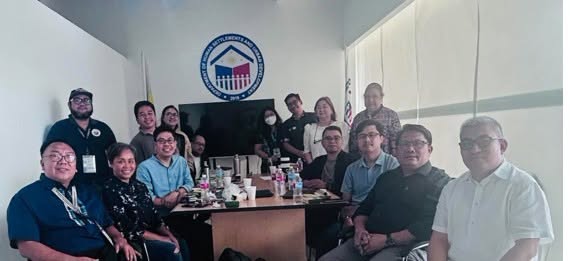
Photo by the UPV Research Team
For thousands of Filipino families, home is right inside or just outside campus gates. State Universities and Colleges (SUCs) are among the country’s biggest landholders, yet properties often stand like isolated fortresses, cut off from the cities they inhabit. This leaves long-term residents living on institutional lands stuck in constant uncertainty.
Seeking a way forward, researchers, city planners, and housing advocates met on September 28, 2026, at the DHSUD Regional Office in Iloilo City for an exploratory roundtable called “From Conflict to Convergence: University Lands & Informal Settlements.” This forum opened dialogue for a study funded by the UP Center for Integrative and Development Studies (UP CIDS), run jointly by research teams from UP Diliman and UP Visayas.
Dismantling the “Invisible Divide”
Participants discussed how walled-off campuses build an “invisible divide” in city governance. This administrative wall isolates university land management from city planning, trapping vulnerable communities in bureaucratic limbo.
The research project sets up a “policy sandbox” where national agencies, local government units (LGUs), and community federations can analyze frameworks together. Organizers noted this academic effort explores inclusive campus planning ideas, not altering legal property lines.
Rethinking “Informal Settlements”
The forum challenged the rigid, bureaucratic lens through which institutions view people living on public lands. Instead of depending on cold datasets that label and push aside families who have lived there for generations, researchers called for a compassionate approach.
Project Principal Investigator Prof. Redento B. Recio, PhD, reframed “informal settlement” through spatial justice, explaining it works as both a noun and a verb. As a noun, it describes physical neighborhoods and vibrant communities’ families built over time. As a verb, it is the continuous struggle of residents negotiating for secure tenure, basic human rights, and a fair place in the city.
Balancing State Mandates with Grassroots Realities
Discussions focused on friction between rigid asset management and local housing needs. Four resource persons shared different views. EnP Eva Marie Marfil of DHSUD VI explained national asset rules and administrative bottlenecks. Locally, EnP Ronald Cartagena from the City Planning and Development Office showed how city land-use plans cross paths with university borders over time.
Atty. Peter Jason Millare from the Iloilo City Local Housing Office shared field data, noting city housing programs offer excellent reference models. Ar. Arr Jay Rubinos of the Homeless People’s Federation of the Philippines balanced these technical points by presenting community-led maps and residents’ lived experiences.
Proposed Pathways for Co-Governance
The roundtable mapped out three steps toward a shared co-governance model. First, a multi-institutional setup must create channels to align national asset rules with city housing needs. Second, the model explores non-displacement protections, using data to pause evictions during validations. Finally, teams can co-design master plans by weaving community mapping and residents’ real-world environments directly into university blueprints.
The UP Visayas research team, composed of Prof. Rhodella A. Ibabao, EnP; Prof. Brian Ventura; and Ms. Maricar Gebucion, expressed its appreciation to the resource persons for their openness and active participation in the study. The team also acknowledged the valuable practical insights and recommendations drawn from the resource persons’ professional experiences in project implementation. The collaborative study is currently ongoing under the joint direction of the research teams from UP Diliman and UP Visayas.