Stakeholders Convene to Strengthen Science Diplomacy for Philippine Environmental Governance
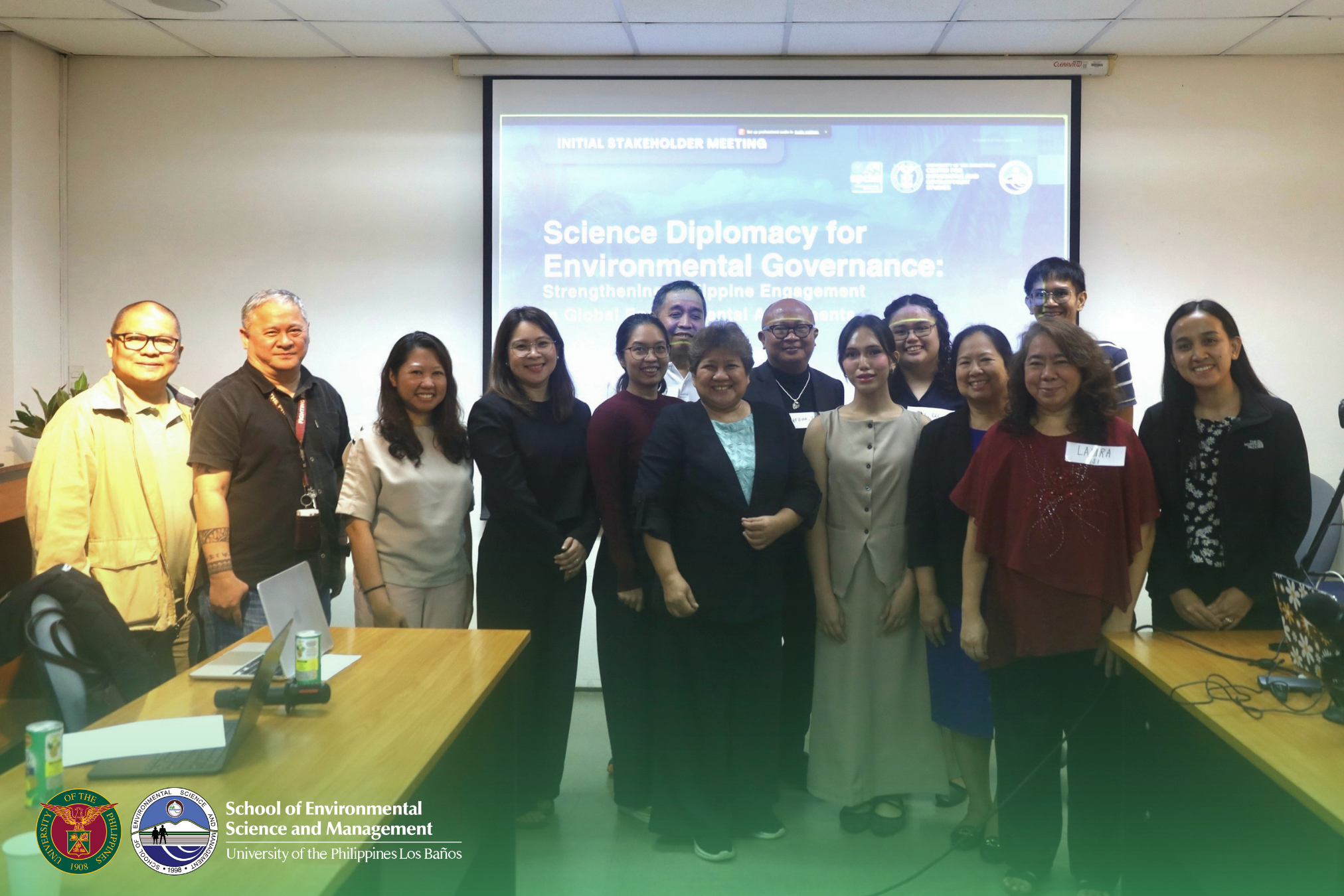
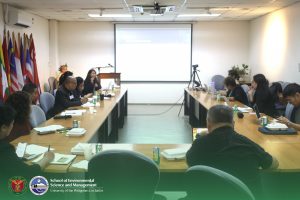
The University of the Philippines Los Baños School of Environmental Science and Management (UPLB-SESAM), in partnership with the UP Center for Integrative and Development Studies (UP CIDS), convened key stakeholders on August 11, 2026, at the UP Asian Center, UP Diliman, for the Initial Stakeholders’ Meeting of the project Science Diplomacy for Environmental Governance: Strengthening Philippine Engagement in Global Environmental Agreements.
The meeting brought together representatives from government agencies, academic institutions, regional organizations, and civil society to discuss opportunities for strengthening the role of science and technical expertise in Philippine environmental diplomacy and governance.
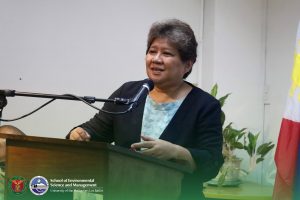
In her opening remarks, Dr. Rosalie Arcala Hall, Executive Director of UP CIDS, emphasized the importance of connecting scientific evidence with diplomatic positions. “Connecting scientific evidence with diplomatic position papers is not merely an academic exercise. It is an absolute necessity if we are to ensure our national interests are effectively articulated and defended on the global stage,” Dr. Hall stressed.
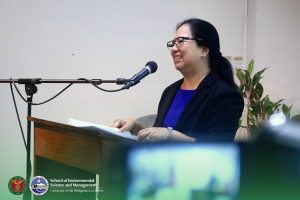
During the overview, Dr. Hildie Maria Nacorda, project leader and professor at UPLB-SESAM, highlighted the need to strengthen the integration of scientific expertise into environmental governance. “The overall goal is to strengthen integration of scientific expertise into Philippine environmental governance,” she said, noting that scientific expertise should be integrated “not only in the international relations table, but also in Philippine environmental governance,” Dr. Nacorda added.
The project seeks to address the gap between scientific expertise, policy development, and diplomatic engagement by identifying and enhancing institutional mechanisms and policy pathways that can facilitate the integration of scientific knowledge into environmental negotiations and the implementation of Multilateral Environmental Agreements (MEAs).
Presenting the preliminary institutional mapping, Dr. Antonio Contreras, policy consultant and professor at SESAM-UPLB, highlighted the existing gap between scientific expertise and decision-making. “Science exists; we have very good scientists all over the country. But it’s not systematically connected to decision-making. Science is not consistently informing the negotiations,” Dr. Contreras said.
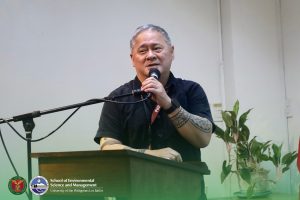
During the discussion, stakeholders shared perspectives on existing coordination mechanisms, challenges in interagency collaboration, the participation of scientists in environmental negotiations, and barriers to accessing and translating scientific information for policy and diplomatic purposes. The discussion also emphasized the importance of strengthening the connection between scientific evidence and diplomatic positions. Dr. Hall said connecting scientific evidence with diplomatic position papers is not merely an academic exercise.
Stakeholders also shared experiences from environmental negotiations. Ms. Jhorace E. Tupas, ENP, Director of International Affairs and Treaties Division of the ASEAN Centre for Biodiversity (ACB), reflected on the importance of scientific inputs in developing national positions. “We were not confident when we didn’t have scientists providing inputs to the Philippine position. So, we make sure that they’re being consulted, and we make sure that the positions are backed with science,” she stressed.
Other participants raised challenges related to coordination and knowledge exchange, including the difficulty of consolidating expertise across a broad academic network and differences in the data produced by government agencies. These inputs highlighted the need for clearer institutional linkages between researchers, policymakers, and negotiators.
The meeting served to validate the project’s preliminary institutional mapping and analytical framework, while identifying priority areas for further research and collaboration. Insights from the discussion are deemed to inform succeeding project activities, including Key Informant Interviews, Focus Group Discussions, comparative case studies, and policy development.
Through continued collaboration among government, scientific, academic, and civil society institutions (the ‘stakeholders’), the project aims to contribute to a stronger science–policy–diplomacy interface and support more science-informed Philippine engagement in global environmental governance. Fifteen participants from different government agencies, academe, non-government organizations, and international agencies attended the round table discussion. (Jorel Sanchez)