UP CIDS Partners with Korea Military Academy for the 2026 Hwarangdae International Symposium in Seoul
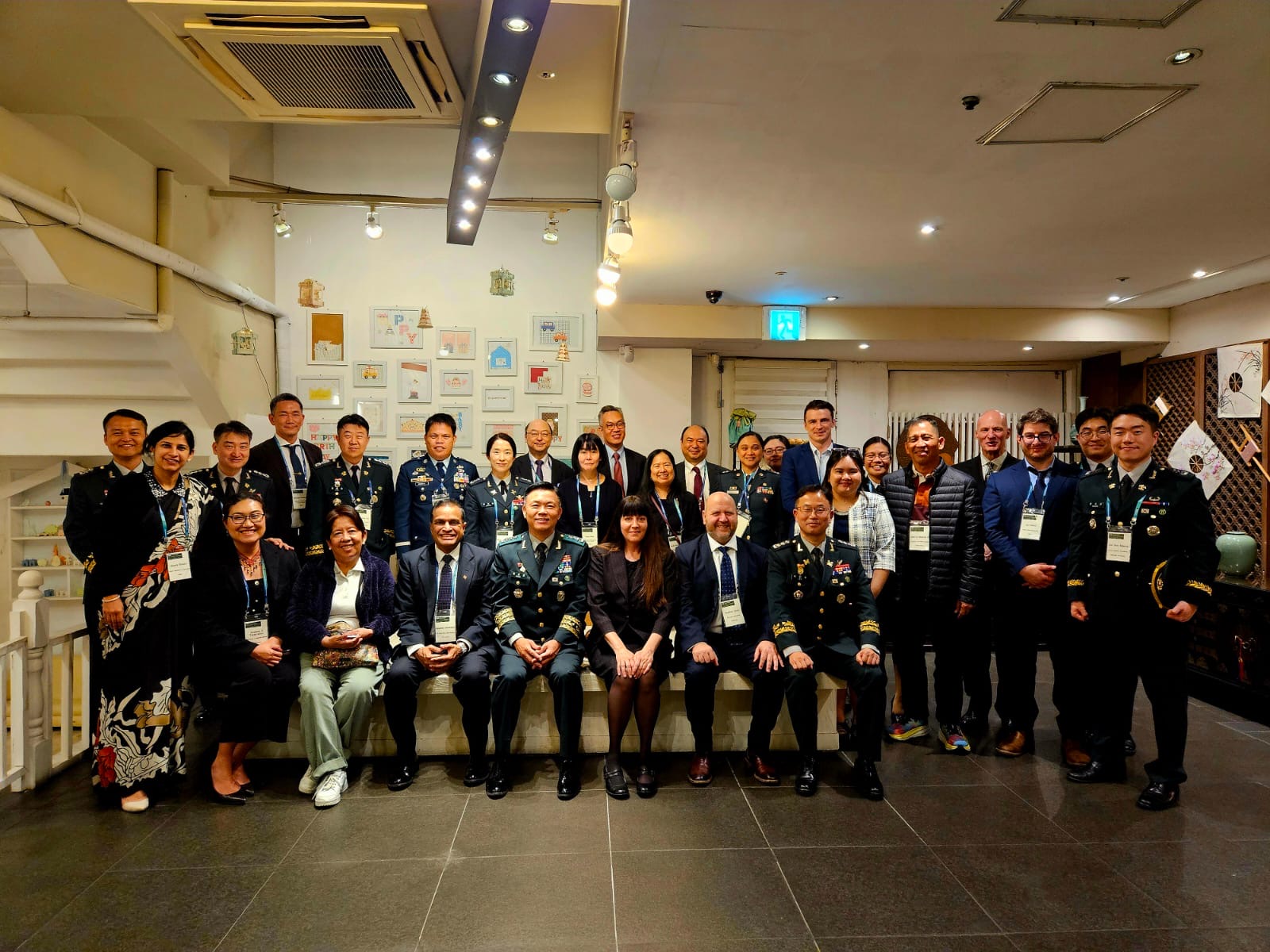
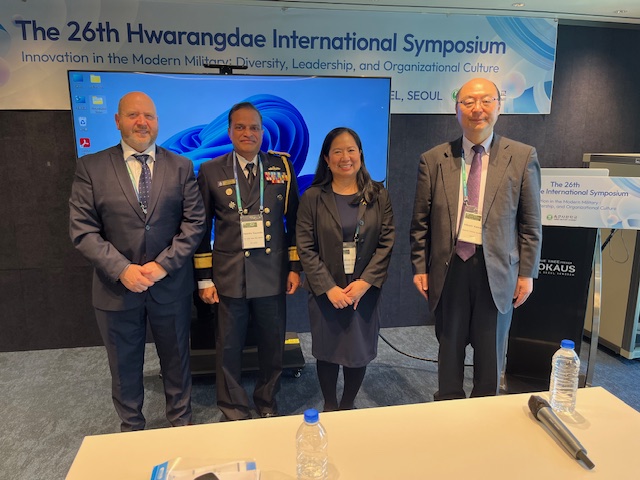
The University of the Philippines Center for Integrative and Development Studies (UP CIDS) served as the offsite conference secretariat for the 2026 Hwarangdae International Symposium, hosted by the Korea Military Academy (KMA) at the ROKAUS Hotel in Seoul, South Korea on October 7, 2026.
The symposium convened military sociologists, security analysts, and defense practitioners across the Asia-Pacific to address critical issues spanning civil-military relations, military organizational culture, alliance dynamics, and force modernization. Opening remarks were delivered by KMA Superintendent Lt. Gen. Park Hu-Seong, Professor Emeritus Hong Doo-Seung, and the keynote address by Inter-University Seminar on Armed Forces and Society (IUS) President Dr. Laura Miller.
As part of Session I on Civil-Military Relations, UP CIDS Executive Director Dr. Rosalie Arcala Hall presented her paper, “Re-Birthing the Philippine Military Industry: Implications for Civil-Military Relations.” The paper synthesizes research outputs from the UP CIDS Progressive Industrial Policy (PIP) project, and the joint Self-Reliant Defense Posture (SRDP) project conducted alongside the Armed Forces of the Philippines Office of Strategic Studies and Strategy Management (AFP OSSSM).
Dr. Hall’s presentation analyzed the policy landscape surrounding the Self-Reliant Defense Posture Revitalization Act (Republic Act 12024) and the Tatak Pinoy Act, examining how domestic defense manufacturing intersects with industrial policy and democratic civilian oversight. She highlighted the historical trajectories of Philippine defense production from the 1950s to the post-democratization era, evaluating the trade-offs of localized procurement against reliance on foreign military acquisitions. While statutory frameworks incentivize public-private partnerships, technology transfer, and university-based R&D, Dr. Hall emphasized that structural hurdles—including a moribund domestic manufacturing base, workforce gaps, and complex procurement regulations—present significant challenges to achieving autonomous defense capabilities. She concluded that effectively leveraging military alliances with the United States and Japan through mandatory offsets, co-production, and local supply chain integration will be crucial to building a sustainable defense industrial ecosystem.
The conference also featured strong research representations from other Filipino scholars and military officers. Presenters included Asst. Prof. Julian V. Advincula Jr. (UP Manila) and Prof. Sharon A. Caringal on AFP service subcultures; Lt. Col. John Paul Alfredo Z. Gopela (PAF) on the governance of the Philippines-Japan Reciprocal Access Agreement; Lt. Col. Almira C. Jabagat (PMA) on dual-military couples; Reynelle Herence L. Ma-ao (Ateneo de Manila University) on gender dynamics among AFP line officers; Dianne Faye C. Despi (University of Delaware / AFP) on US-Philippines Balikatan exercises; and Maria Sabrina Erica M. Carlos and Dr. Leslie A. Lopez (Ateneo de Manila University) on Filipino military leadership under the Comprehensive Archipelagic Defense Concept.
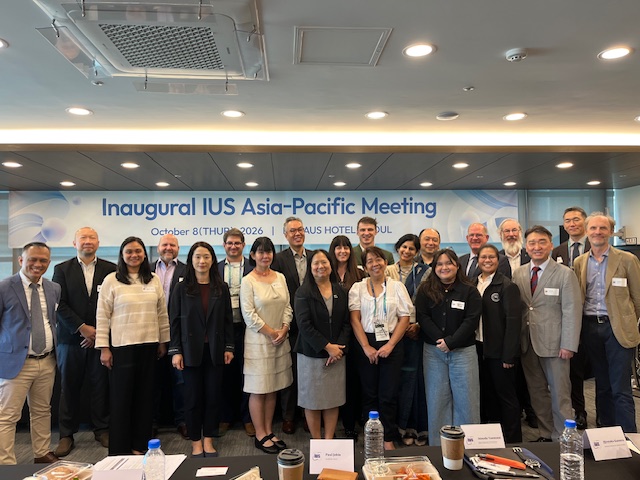
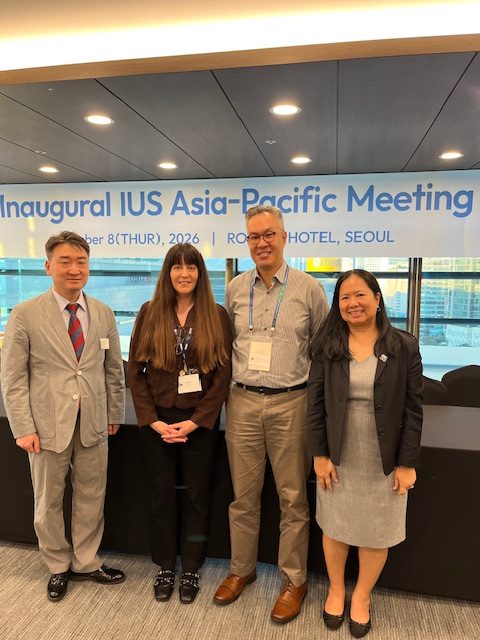
Following the symposium, UP CIDS supported the post-conference exploratory meeting on October 8, which brought together regional scholars to discuss establishing an Asia-Pacific chapter of the Inter-University Seminar on Armed Forces and Society (IUS). Dr. Rosalie Arcala Hall is a Council Member of the IUS on Armed Forces and Society, and is one of key organizers of the IUS Asia Pacific Exploratory Meeting.