The 8th Katipunan Conference: Policy, Power, and Partnerships at the Business-Government Nexus
On 22 October 2026, policymakers, government officials, academics, researchers, and students convened at the Henry Sy, Sr. Innovation Center of Miriam College in Quezon City for the 8th Katipunan Conference, centered on the theme “Philippine Strategic Outlook 2030: Policy, Power, and Partnerships at the Business-Government Nexus.”
Jointly organized by the University of the Philippines Center for Integrative and Development Studies (UP CIDS), Miriam College, and the Ateneo School of Government (ASOG), with the support of the Konrad-Adenauer-Stiftung (KAS) Philippines, the conference is the third iteration of the partnership. The Katipunan conferences were originally convened by UP CIDS Strategic Studies Program. The conference brought together experts from government, academia, civil society, and the private sector to facilitate evidence-based dialogue regarding the country’s most pressing policy challenges. Through keynote addresses, expert plenary discussions, and parallel research presentations, the conference’s attendees explored pathways for strengthening national resilience, regional cooperation, and strategic governance as the country advances toward 2030.
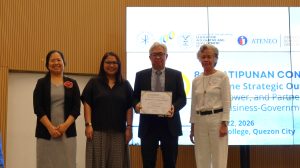
The opening program was moderated by Dr. Rosalie Arcala Hall, Executive Director of UP CIDS. Welcome messages were delivered by Dr. Maria Regina Lucia M. Lizares, President of Miriam College; Atty. Angelo A. Jimenez, President of the University of the Philippines; and Fr. Roberto C. Yap, SJ, President of Ateneo de Manila University. The opening ceremony concluded with opening remarks from Ms. Daniela Braun, Country Director of Konrad-Adenauer-Stiftung Philippines, who highlighted the importance of partnerships among academic institutions, government, and international organizations in addressing emerging strategic and development challenges. The opening session with the launch of the 8th Katipunan Conference monograph, featuring nine (9) selected papers from this year’s conference.
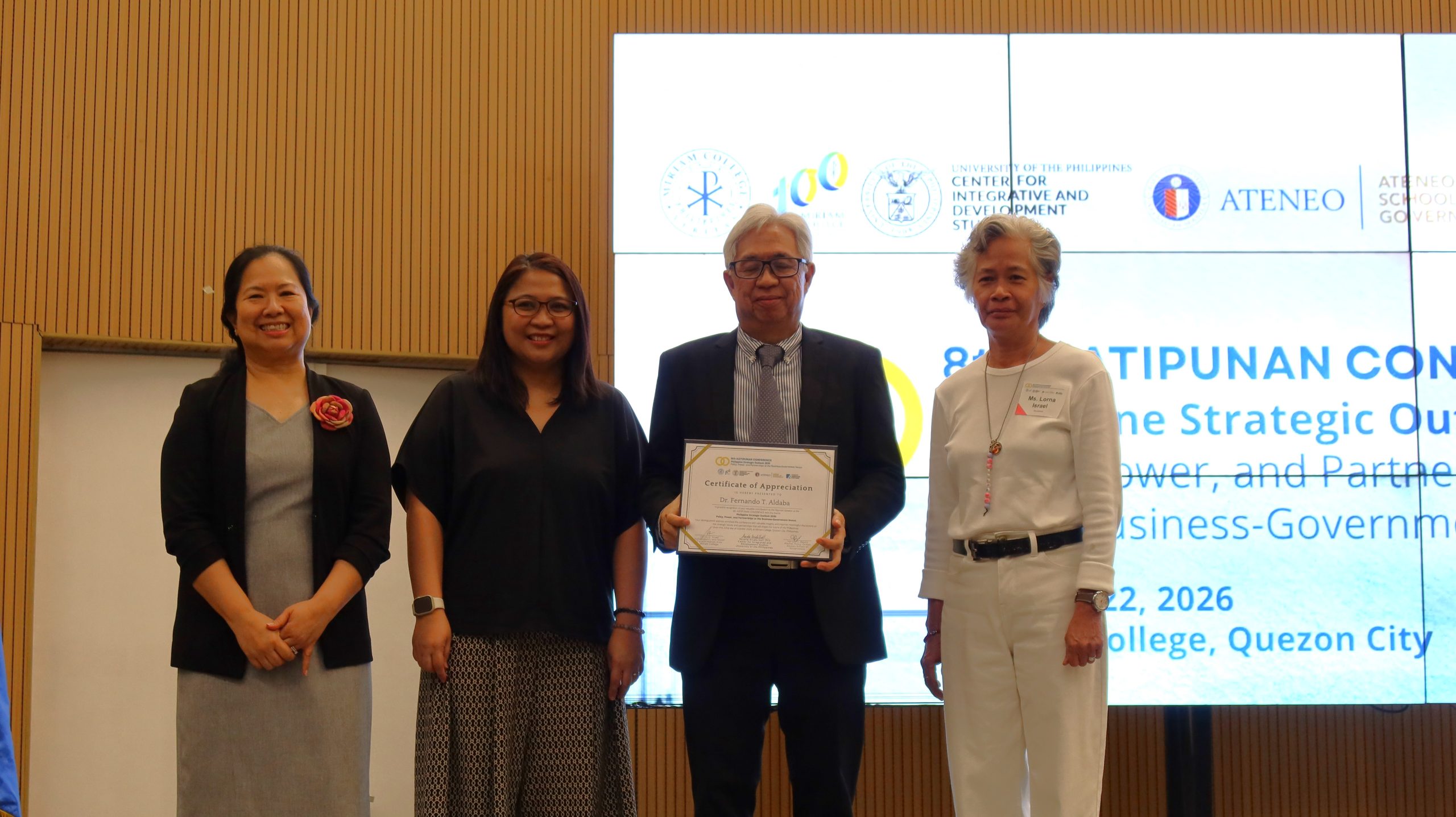
The conference’s keynote address was delivered by Dr. Fernando T. Aldaba, former Dean of the School of Social Sciences of Ateneo de Manila University, following an introduction by Prof. Lorna Q. Israel, Area Chair for Sustainability and Social Transformation at Miriam College. The keynote set the stage for the day’s discussions by emphasizing the importance of long-term
strategic thinking, collaborative governance, and evidence-based policymaking in navigating an increasingly complex geopolitical, economic, and social landscape.
The conference’s academic program commenced with Plenary Expert Panel 1: Regional Security, organized by UP CIDS and was moderated by Dr. Dennis V. Blanco of the University of the Philippines Diliman. The panel featured Dr. Josef T. Yap of the Ateneo School of Government, Dr. Jonathan Malaya, Special Adviser to the National Security Council, and Dr. Aaron Jed Rabena of the UP Asian Center. The panel examined the evolving regional security environment, strategic competition in the Indo-Pacific, and their implications for Philippine national security and foreign policy. The discussion concluded with an interactive question-and-answer panel session that encouraged meaningful engagement between participants and the distinguished panelists.
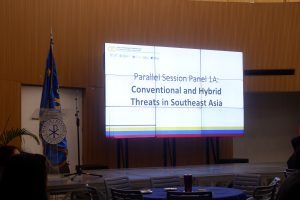
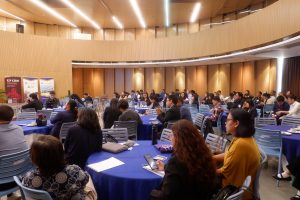
Building on the themes introduced during the plenary session, participants proceeded to the first set of parallel research presentations. UP CIDS organized Panel 1A: Conventional and Hybrid Threats in Southeast Asia, which showcased research on grey-zone coercion, future security threats to Philippine outer space assets, and maritime domain dynamics in the South China Sea. Running concurrently, Panel 1B: Climate Emergency and Climate Resilience explored issues surrounding land reclamation, climate justice, food security, and agribusiness transformation, highlighting the interconnected nature of environmental sustainability, economic development, and national resilience.
Following the morning sessions, participants gathered for a Networking Lunch sponsored by the Department of Foreign Affairs’ Foreign Service Institute (DFA-FSI). Beyond providing an opportunity for fellowship, the luncheon served as an important venue for policymakers and academics to cultivate professional networks and identify opportunities for future collaboration on strategic policy issues affecting the Philippines.
The afternoon sessions opened with Plenary Expert Panel 2: Economic Resilience, organized by Miriam College. Moderated by Mr. James Catudan, the panel brought together Ms. Girlie Grace J. Casimiro-Igtiben of the Department of Economy, Planning, and Development, Ms. Prezatia Moseska Maria Vicario of the Development Academy of the Philippines, Engr. Romelen Tresvalles of the Department of Science and Technology, and Ms. Helen B. Lising of the Philippine Chamber of Commerce and Industry–National Capital Region. The discussion examined strategies for enhancing the country’s economic resilience through sound governance and stronger partnerships between the public and private sectors.
The second set of parallel sessions continued the conference’s emphasis on evidence-based policy research. Organized by UP CIDS, Panel 2A: Defense Cooperation and Alliance Interoperability in the Indo-Pacific examined evolving defense partnerships, alliance strategies, and the Philippines’ strategic positioning amid an increasingly dynamic regional security environment. Running concurrently, Panel 2B: Energy Security and Transition Pathways explored Philippine energy diplomacy and comparative perspectives on just energy transition policies across Southeast Asia.
Following the afternoon break, participants reconvened for the final set of parallel sessions. Organized by UP CIDS, Panel 3A: Maritime Security, Regional Mechanisms, and Dispute Management featured research on governance and the Philippine blue economy as well as assessments of the Philippines-China Bilateral Consultation Mechanism in the South China Sea. Concurrently, Panel 3B examined conventional and emerging hybrid threats in Southeast Asia through presentations addressing strategic influence, disinformation, and approaches to countering malign foreign information interference. Together, these sessions underscored the importance of interdisciplinary scholarship in informing Philippine strategic policy.
The conference culminated in Plenary Expert Panel 3: Malign Foreign Influence and Interference, organized by the Ateneo School of Government. Moderated by Dr. Don Mclain Gill, the panel featured Ms. Janina Santos of Doublethink Lab, Ms. Bea Cupin of Rappler, and Mr. Michel Andre del Rosario of the Center for Information Resilience and Integrity Studies. The panel examined the rapidly evolving information environment, the challenges posed by foreign influence and disinformation campaigns, and strategies for strengthening democratic resilience through media literacy, institutional cooperation, and informed public discourse.
The conference concluded with closing remarks from Dr. Jennifer S. Oreta, Dean of the Ateneo School of Government, and Prof. Lorna Q. Israel, Area Chair for Sustainability and Social Transformation at Miriam College. Bringing together experts from government, academia, civil society, and the private sector, the 8th Katipunan Conference reinforced the value of
collaborative, evidence-based policymaking in addressing the Philippines’ evolving strategic landscape. Through its organization of the conference’s Regional Security Plenary and thematic panels on regional security, defense cooperation, and maritime security, UP CIDS reaffirmed its commitment to advancing policy-relevant research and fostering informed dialogue that contributes to a more secure, resilient, and forward-looking Philippines.
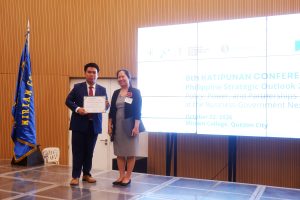
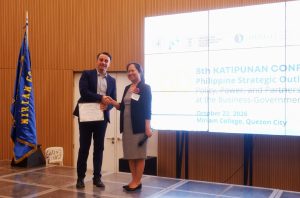
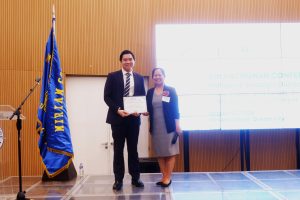
Opening Ceremony Photos
Plenary Expert Panel 1
Parallel Session 1A Photos
Networking Lunch