Bringing Local Ecosystems to the International Stage
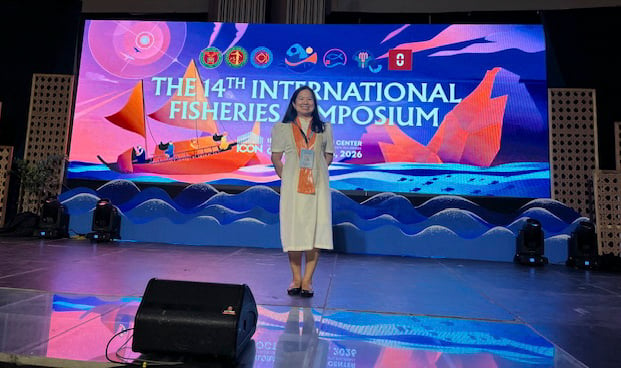
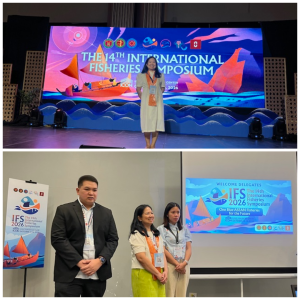
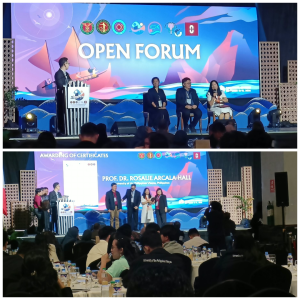
The University of the Philippines Center for Integrative and Development Studies (UP CIDS) showcased its interdisciplinary scholarship on sustainable coastal management, marine governance, and biodiversity conservation at the 14th International Fisheries Symposium.
UP CIDS Executive Director Dr. Rosalie Arcala Hall delivered a plenary address entitled “Maritime Security and Fisheries: Intersections and Tensions.” Drawing from research in Tawi-Tawi and Carles, Iloilo, Dr. Hall highlighted how human security, coastal livelihoods, and fisheries governance intersect within the broader maritime security architecture. She emphasized that while maritime security is essential for a sustainable blue economy, law enforcement alone cannot deliver equitable outcomes without addressing market drivers, supply chain dynamics, and the socio-economic well-being of fishing communities.
Dr. Hall also contributed to the symposium’s oral presentation sessions, presenting her paper “Social Identities in Cross-Border Trade for High Value Live Reef Fish: A Case Study of Tawi-Tawi, Philippines.” Based on field data from Sitangkai and Bongao, the study examined how social identities—such as gender, ethno-linguistic background, and island community networks—shape market access and informal trading structures within the high-value live reef fish supply chain. The research shed light on the lived realities of low-income, small-scale fishers navigating unregulated market hubs in the borderlands of the Sulu Sea.
Complementing these policy and governance perspectives, Dr. Victor Marco Emmanuel Ferriols of UP Visayas presented a poster on behalf of the UP CIDS Conservation and Biodiversity Program. Entitled “Reframing the Concept of Abandoned, Undeveloped, and Underutilized Fishponds,” the poster highlighted findings from Leganes, Iloilo, where natural ecological recovery has allowed mangroves and associated biodiversity to re-establish. Rather than viewing these areas solely as idle aquaculture sites, the presentation emphasized their emerging value as natural habitats capable of supporting biodiversity, coastal protection, carbon sequestration, and fisheries enhancement.
Together, these presentations underscored UP CIDS’ commitment to advancing evidence-based research that connects marine science, market realities, and security policy to support climate-resilient coastal management and sustainable fisheries governance in the Philippines.