Pax Silica in light of the Magnifica Humanitas
Benilde School of Diplomacy and Governance
Critical Futures Program UP CIDS
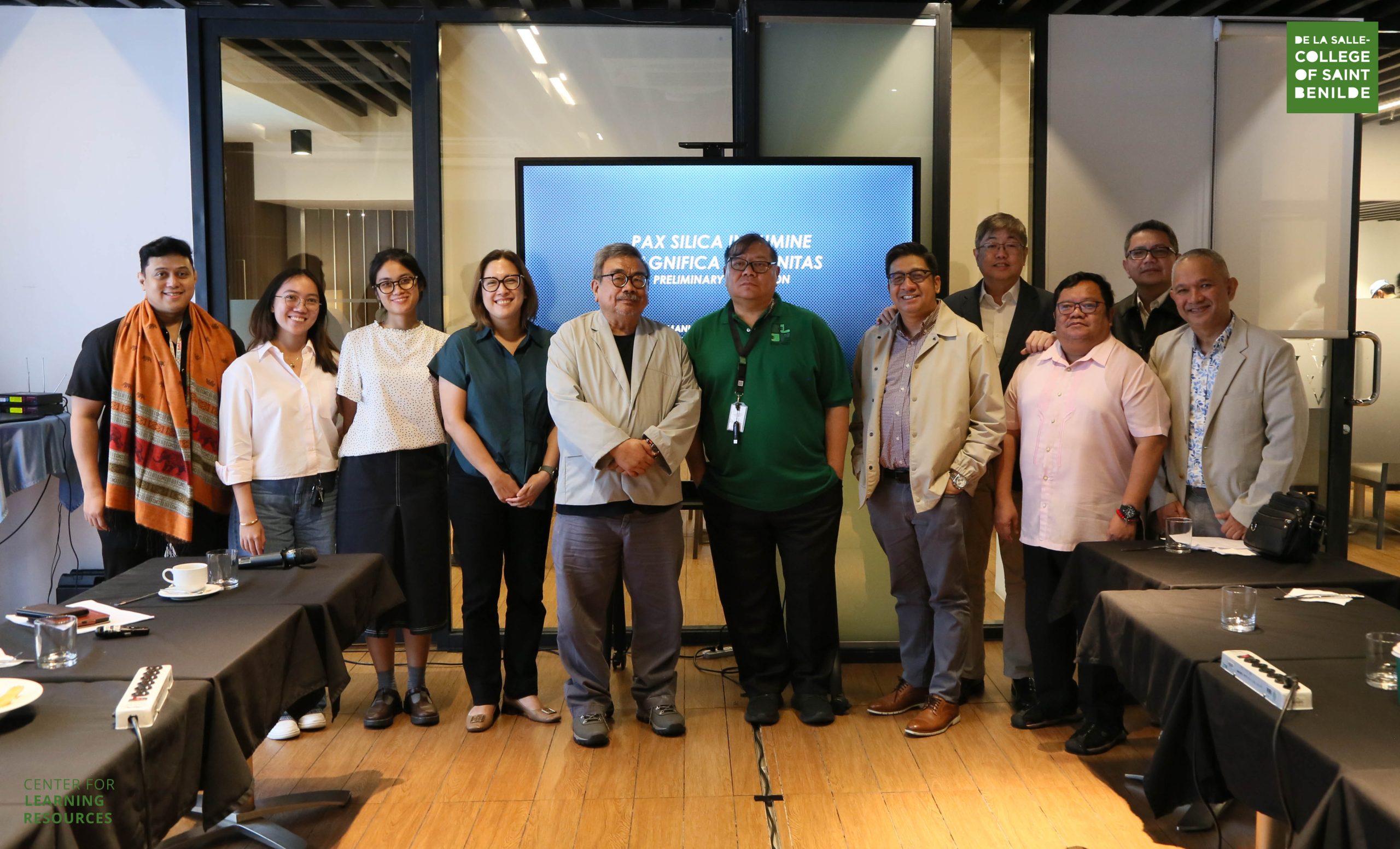
The Critical Futures Program of UP Center for Integrative and Development Studies conducted a roundtable discussion entitled “Pax Silica in light of the Magnifica Humanitas” in partnership with the Benilde School of Diplomacy and Governance last August 12, 2026 at the Vatel Restaurant Manila, The Atrium at Benilde Campus. The event featured a discussion led by Dr. Emmanuel C. Lallana followed by inputs from reactors Sherwin Ona, Benhur Ong, Br. Michael Valenzuela, Allen Surla, along with co-organizer Dr. Gary Ador Dionisio. The one-day roundtable discussion was held to prompt a discussion among the academic community and the church on issues and ethical concerns over the upcoming Pax Silica project in Clark, Tarlac.
The event opened with an introduction reviewing publicly available information on Pax Silica, common misconceptions, and criticisms surrounding the proposed project. The discussion highlighted the project’s opportunities for investment and its potential to enable the Philippines to move up the global technology value chain, while also shedding light on its possible negative implications, including environmental damage and the geopolitical and economic risks it may give rise to.
Following the introduction, Pope Leo XIV’s Magnifica Humanitas was presented as a framework through which to examine the ethics of Pax Silica. Magnifica Humanitas, it was discussed, must not merely be treated as a religious document, but as a reflection on humanity in the age of AI. Several principles concerning AI were discussed: (1) that AI is never neutral, as it takes on the characteristics of those who devise, finance, regulate, and use it; (2) that it is not a force antagonistic to humanity nor is it “inherently evil”; and (3) that it is a valuable tool that must serve human dignity and the common good. Magnifica Humanitas can thus serve as a set of guardrails for Pax Silica, particularly in addressing technocratic domination, governance and accountability, geopolitics, and resource depletion and environmental concerns.
The discussion also touched on AI sovereignty and the challenges of developing domestic AI capacity. It was noted that countries face limitations in developing AI systems independently, particularly given the high costs of developing large language models. A “managed interdependence” approach was raised as a possible framework, positioning countries between the poles of technological dependence and complete self-sufficiency.
The first reactor, Benhur Ong, praised the lecture and commented that the perspective it provided should be introduced to and adopted by government officials. Br. Valenzuela reinforced several ideas in Dr. Lallana’s discussion, emphasizing that technology should not be monopolized by tech giants, and that human dignity must be prioritized above all. Sherwin Ona provided a geopolitical perspective on Pax Silica, discussing other actors in the AI race and warning of their respective state-centric agendas.
The RTD was concluded with a summary by the host, Edwin Estrada, and a discussion on how to further deepen the conversation and raise the issues within academic spheres and up to the national level.