Advancing Korea-ASEAN Partnerships: Highlights from the 2026 KACPE International Public Policy Symposium
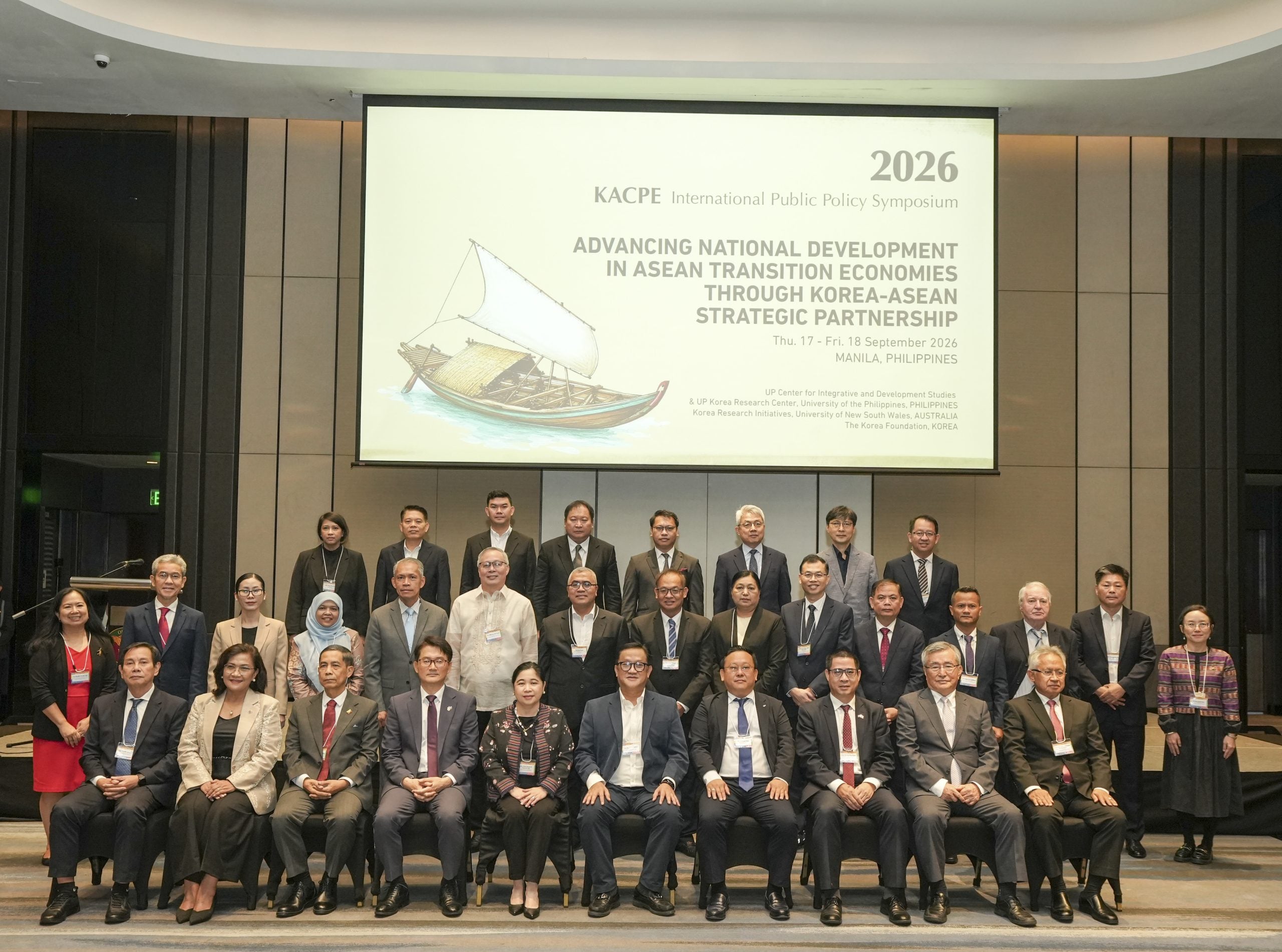
On September 18, 2026, the 2026 KACPE International Public Policy Symposium was held at Conrad Manila in Pasay City, Metro Manila, Philippines. Centered on the theme “Advancing National Development in ASEAN Transition Economies through Korea-ASEAN Strategic Partnership,” the conference convened senior policymakers, administrative leaders, and academic experts from South Korea and Southeast Asia to address shared development challenges.
This marked the Philippines’ first time hosting the international symposium, organized through the UP Center for Integrative Studies and the UP Korea Research Center, in partnership with the Korea Research Initiatives at the University of New South Wales, Australia, and sponsored by the Korea Foundation.
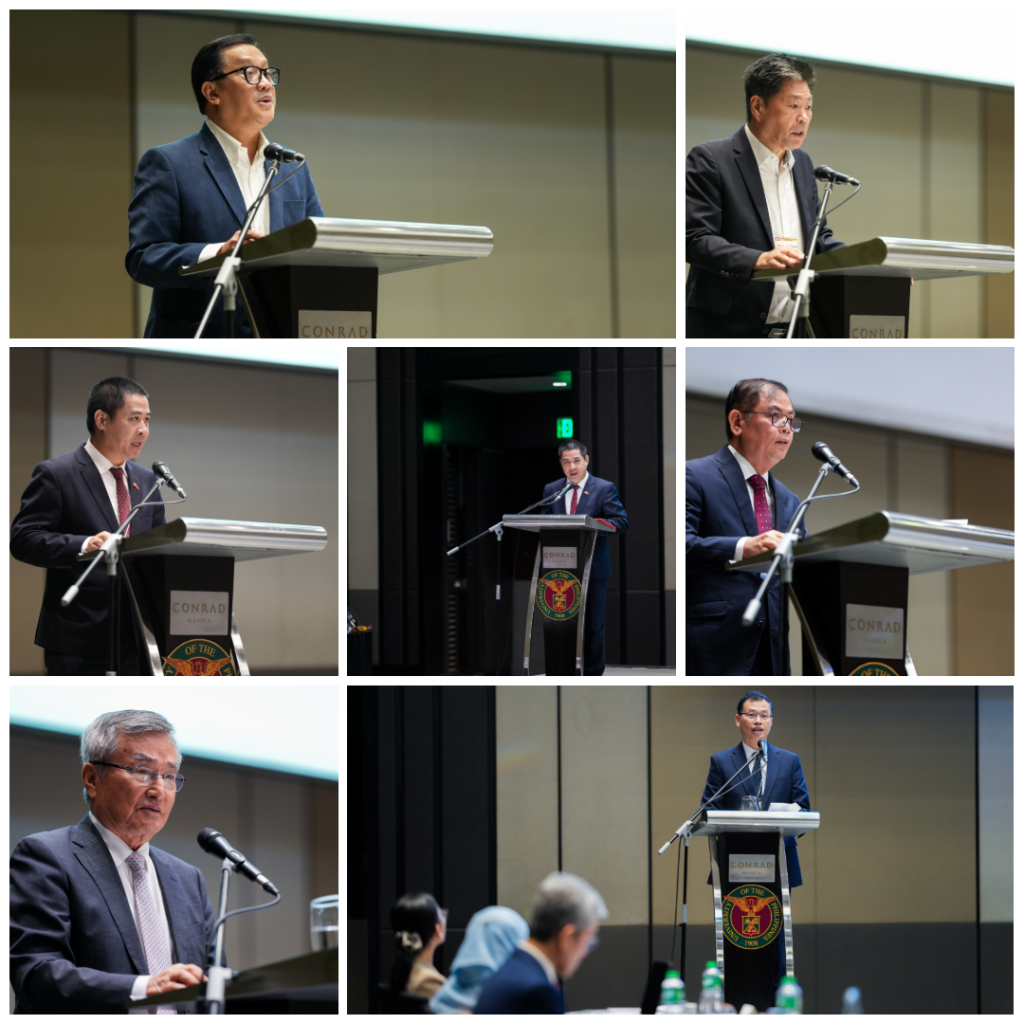
The opening session was chaired by Dr. Rosalie Arcala Hall, Executive Director of the UP Center for Integrative and Development Studies (UP CIDS). University of the Philippines President Atty. Angelo A. Jimenez opened the program by welcoming the foreign dignitaries, followed by congratulatory messages from leadership representing UNSW Korea Research Initiatives and The Korea Foundation, alongside addresses from Ambassador LEE Chul of the Mission of the Republic of Korea to ASEAN and H.E. U Ko Ko Hlaing, Former Union Minister of the Ministry (2) of the President’s Office, Myanmar.
Rounding out the distinguished guests in attendance were H.E. Dr. Lai Thai Binh, Ambassador Extraordinary and Plenipotentiary of Viet Nam to the Philippines; Dr. Korm Ribaun, Secretary General of Cambodia’s National Committee for the Economic and Social Commission for Asia and the Pacific; YBrs. Puan Mastura Ahmad Mustafa, Deputy Secretary General (Trade) of Malaysia’s Ministry of Investment, Trade and Industry; and Prof. Seung-Hoon Lee of Seoul National University and former Chairman of the Presidential Committee on Green Growth of the Republic of Korea.
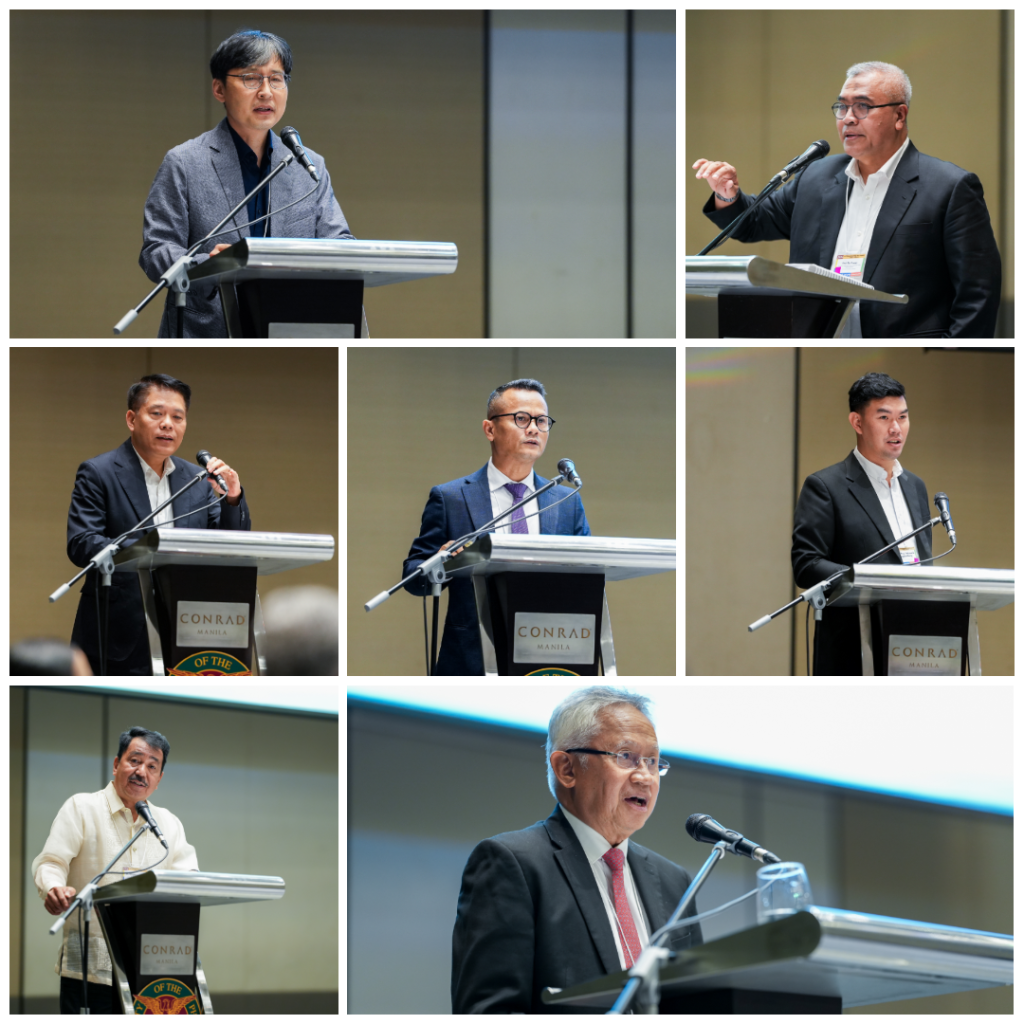
Other distinguished speakers included Dr. Philip Arnold P. Tuaño, President of the Philippine Institute for Development Studies; Prof. Dr. Erwan Agus Purwanto, Deputy Minister of Indonesia’s Ministry of Administrative and Bureaucratic Reform; Dr. J. Prospero de Vera III, former Chairperson of the Commission on Higher Education; and Datuk Dr. Anesee bin Ibrahim, former Secretary General of Malaysia’s Ministry of Higher Education.
The program then transitioned into the invited keynote speech, delivered by Undersecretary Maria Theresa B. Dizon-de Vega of the Department of Foreign Affairs on behalf of Secretary Maria Theresa P. Lazaro.
The symposium’s morning sessions examined critical frameworks in geoeconomic stability and state governance. Session 1, chaired by Dr. Ador Torneo (Dean of the College of Liberal Arts, De La Salle University) focused on regional security and economic development in an era of geoeconomic realignment, incorporating perspectives from diplomats and trade experts from Myanmar, Vietnam, Cambodia, Malaysia, and South Korea.
Following this, Session 2 shifted the focus toward public sector reform, chaired by Prof. Mark Turner (Adjunct Professor, Korea Research Initiatives, University of New South Wales). High-level representatives and civil service delegates from Laos, Cambodia, Myanmar, the Philippines, Thailand, Indonesia, and Korea shared global experiences and actionable strategies for strengthening state administrative capacity and public institution performance.
In the afternoon, attention turned to human capital and regional integration. Session 3, chaired by Prof. Eko Prasojo (President, Indonesian Association for Public Administration, Universitas Indonesia), analyzed higher education reform as a fundamental driver for national growth, featuring panel contributions from education ministry officials, university leaders, and research heads across the region.
The conference concluded with a plenary session chaired by Datuk Dr. Anesee bin Ibrahim (Former Secretary General, Ministry of Higher Education, Malaysia), where key panelists synthesized cross-cutting insights across security, public administration, and education to chart a path forward for Korea-ASEAN strategic cooperation. Dr. Rosalie Arcala Hall closed the symposium by emphasizing the importance of sustained policy exchange and institutional collaboration.
Complementing the formal agenda, welcome and farewell dinners framed the program, providing international delegates and host officials an informal space for bilateral networking, cross-border camaraderie, and relationship building.